







What is a luminescence plate reader?
A luminescence plate reader (longform: luminescence microplate reader) is a piece of equipment capable of detecting the light photons emitted by chemical, bio-chemical or enzymatic reactions in a microplate and quantifying them.
Luminescence detection is not an absolute measurement, like absorbance, and the intensity of the signal is usually relative to other measurements or to a reference measurement taken by an instrument. Consequently, they quantify the light signal emitted by a sample in Relative Light Units (RLU).
Luminescence plate readers are used for different applications in various fields, such as academic life science research, drug discovery and screening, clinical laboratories, synthetic biology and food or water quality monitoring.
Choosing the right luminescence plate reader directly affects the quality, speed, and cost of your assay data. BMG LABTECH offers a range of instruments built specifically for luminescence detection - from dedicated single-mode readers to fully configurable multi-mode platforms.
- Initial recommendation
- Detailed Recommendation
Get help selecting the right microplate reader
Configure your microplate reader and get an initial recommendation!
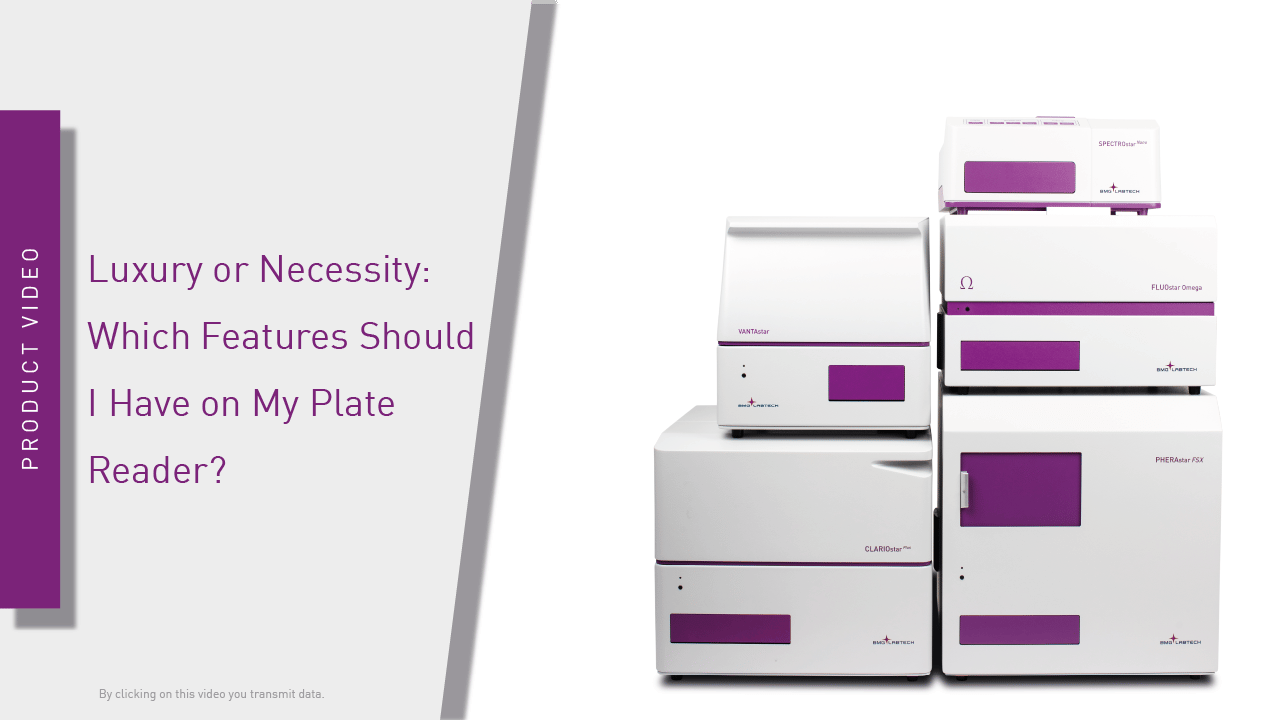
Luminescence plate readers are available as stand alone, dedicated readers (luminometers) or as part of multi-mode microplate readers.
Do you want to use a luminescence plate reader in your lab?
Request a quote here or more information here:
If you are on the market for a new luminescence reader, there are a few factors to take into account, as the performance of the instrument can significantly affect the quality of your assay results.
Sensitivity
The luminescent signal is typically generated by a bio-chemical or chemical reaction and does not require excitation light. Consequently, it generally offers a superior sensitivity when compared to absorbance or fluorescence. The unspecific background or noise signal is extremely limited when compared to fluorescence intensity, since there is no excitation process that can trigger light scatter or autofluorescence from both the sample and the microplate.
Nevertheless, a luminescence plate reader with high sensitivity will deliver assay data with a better statistic, less variability among replicates, and a larger delta (distance) between responding and not-responding samples. In addition, an increased sensitivity will allow you to reduce the amount of reagents and/or samples used to achieve good quality data and consequently reduce costs.
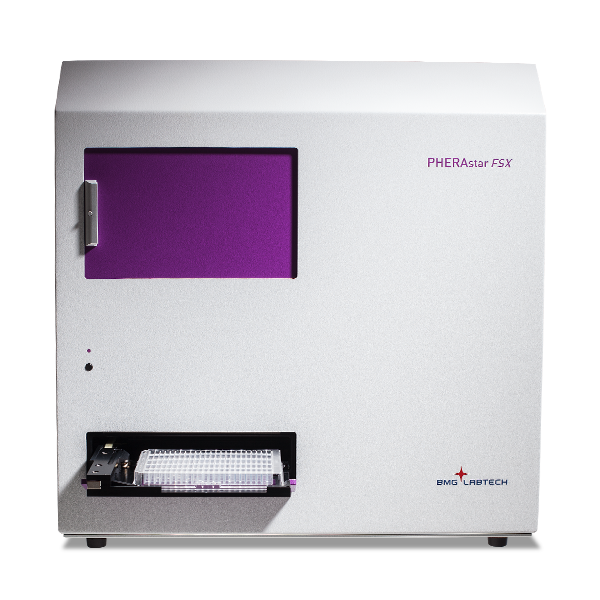
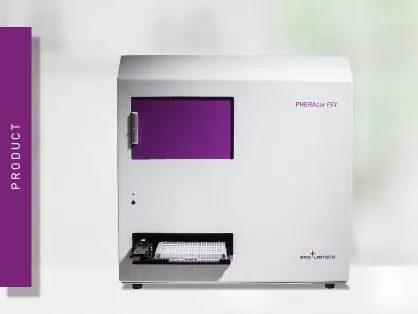
All BMG LABTECH luminescence plate readers use optimised low-noise photomultiplier tube (PMT) detectors. The PHERAstar FSX delivers the highest sensitivity in the range, making it the preferred choice for HTS applications where signal is at a premium.
Dynamic range
BMG LABTECH's Enhanced Dynamic Range (EDR) automatically measures bright and dim samples in the same microplate in a single run - no manual gain adjustment, no repeat measurements. EDR provides up to 8 concentration decades - the widest dynamic range available in a luminescence plate reader on the market.
Available on: PHERAstar FSX, CLARIOstar Plus, VANTAstar.
Wavelength selection
This capability (with filters or monochromators) in luminescence plate readers is not mandatory (as for absorbance or fluorescence detection), especially when detecting a basic assay. However, depending on the application and especially for luminescent assays with multiple signals, the possibility to select the emission from a wavelength range is beneficial. Filters or monochromators can be employed for this purpose. This option is useful when developing new assays or detecting multiple luminescent signals. Moreover, it helps to optimise the assays by reducing background noise.
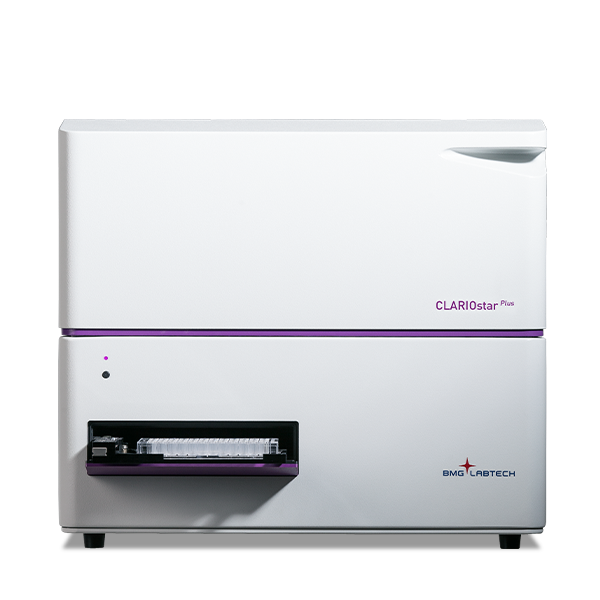
Filters are usually more sensitive, whereas monochromators offer more flexibility. An exception to this paradigm is the Linear Variable Filter (LVF) MonochromatorTM system available on the CLARIOstar Plus and the VANTAstar. LVF Monochromators have filter-like performance and make the CLARIOstar Plus the most sensitive monochromator based microplate reader on the market. LVF Monochromators can be used in fluorescence intensity and luminescence detection. Moreover, monochromators have the capability to acquire scans and offer extra flexibility for assay development.
Bioluminescence Resonance Energy Transfer (BRET)
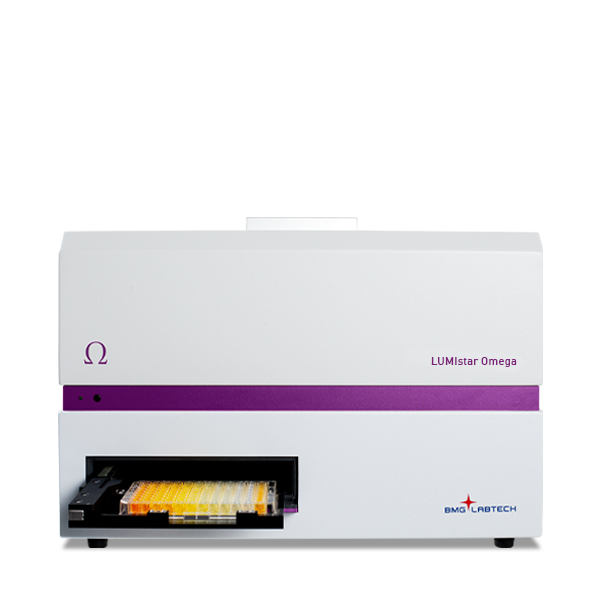
Additionally, the capability of detecting two emission channels simultaneously is quite beneficial for BRET and NanoBRET assays. This option halves measurement time and reduces data variability. Simultaneous Dual Emission (SDE) detection is available on the LUMIstar Omega and on the PHERAstar FSX.
Light cross-talk
Light cross-talk is mainly related to luminescence detection and happens when during the measurement of a well, the light signal from the adjacent wells on a microplate is also picked up by the detector. This leads to adulterated results. Cross-talk is specifically a factor when working with high-density plates (384-wells and higher).There are two ways by which cross-talk light can be picked up by the detector, either from the top of the well or through the plastic wall of the microplate.
High-end plate readers such as the CLARIOstar Plus, the VANTAstar and the PHERAstar FSX can compensate this factor by physically blocking the light coming from the neighbouring wells. Specific algorithms can calculate the amount of light transmitted through the plastic wall and subtract it from your samples to deliver a more robust performance.
Glow and flash luminescence
When looking for a luminescence microplate reader, you should consider the nature of the assays you want to run. According to their kinetic, luminescent assays can be divided in flash and glow reactions. Flash reactions are a short-lived and give off a very bright signal for a very short amount of time, usually seconds. Glow reactions are rather long-lived. The reaction can last for several minutes, but usually emits a less intense signal.
Any luminescence microplate reader can detect glow reactions. Flash assays require instead the use of reagent injectors. By manually pipetting reagents into the wells of a microplate you can run the risk of losing the peak of your reaction as the short-lived signal could already be exhausted before you detect it. Our instruments equipped with reagent injectors can automatically inject and detect the signal of a well and then move to the next one.
Reagent injectors are also beneficial for Dual Luciferase Reporter (DLR) assays. Here, the activity of two luciferases is sequentially measured from a single sample and reports the transcription of a gene of interest and a transfection control. Both assays can be completed in about 4 seconds using an instrument with reagent injectors.
Our luminescence plate readers
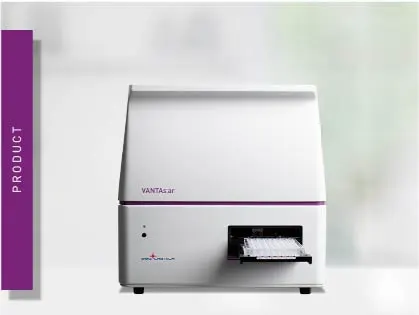
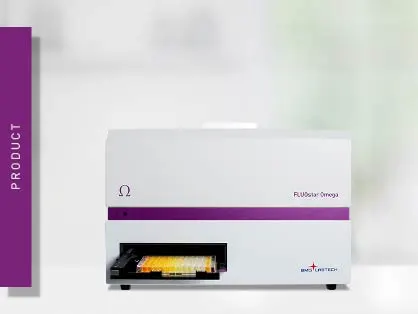
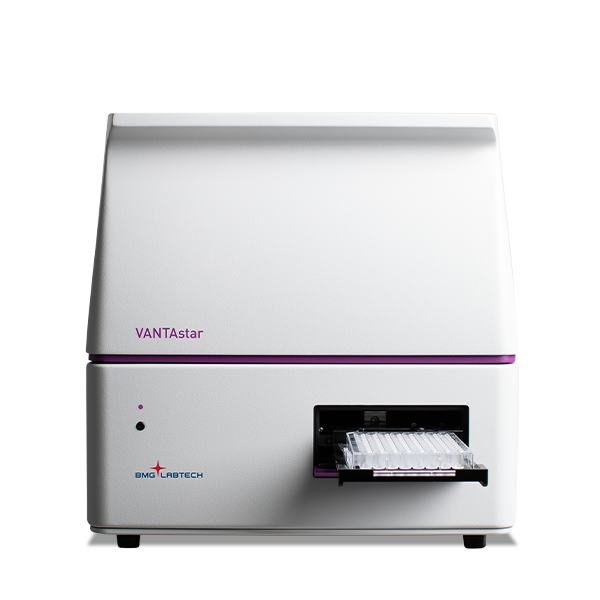
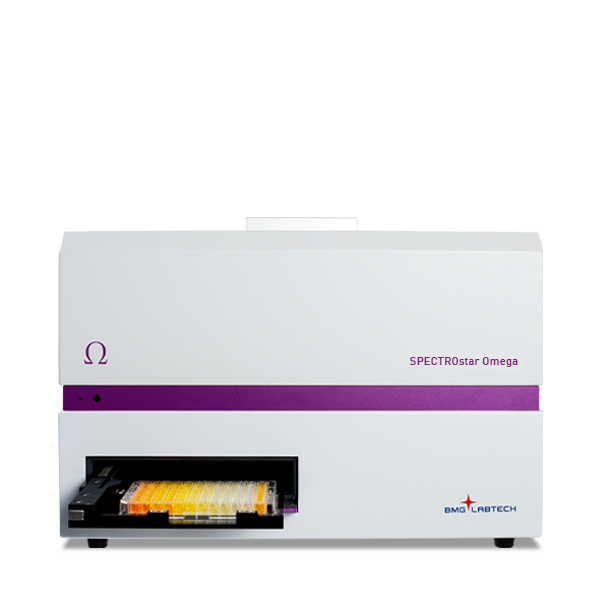
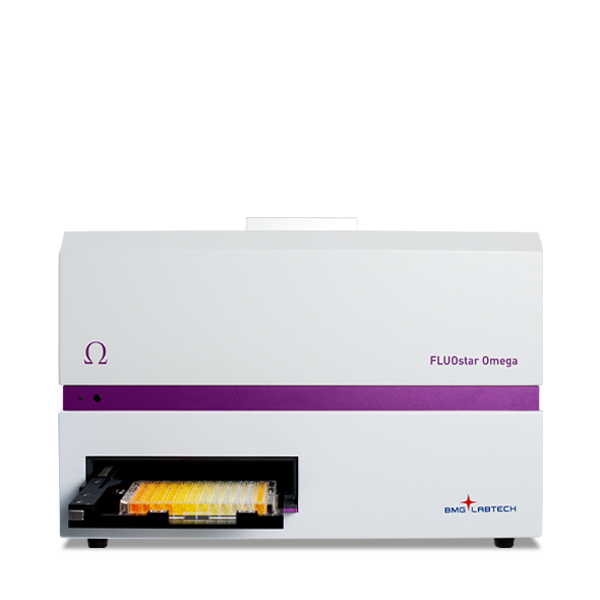
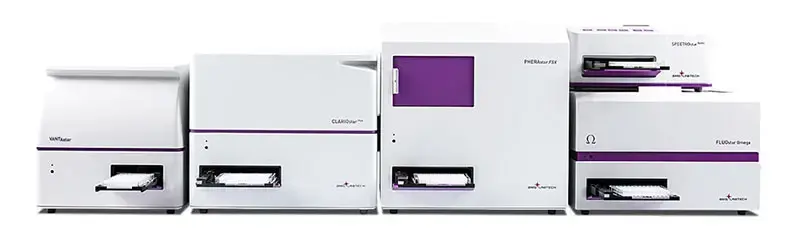
BMG LABTECH offers luminescence detection on both its dedicated luminescence plate reader, the LUMIstar® Omega, and on multi‑mode systems such as the PHERAstar® FSX, CLARIOstar® Plus, VANTAstar®, and FLUOstar® Omega.
All luminescence‑capable readers are certified for Dual‑Luciferase Reporter assays, ensuring reliable performance through optimized low‑noise PMTs and the option to integrate high‑precision reagent injectors.
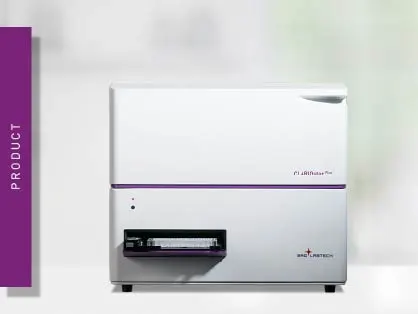
CLARIOstar Plus
VANTAstar
Omega Series
Trusted and loved by:
Which luminescence assays can be measured by a plate reader?
Both a single- or multi-mode microplate reader (incl. for instance absorbance and fluorescence TRF and AlphaScreen detection) can cover a wide range of assays including all Promega bioluminescence assays, enzymatic reactions, gene expression by Dual Luciferase Reporter gene (DLR), luminescent calcium flux and chemiluminescent ELISAs.
Luminescence microplate readers are also useful for analysing cell-based assays such as cell viability (ATP-based), cytotoxicity and apoptosis assays, signalling pathways and metabolism. Mycoplasma contamination in cells can also be measured.
Even proximity or protein-protein interaction assays can be measured by BRET and nanoBRET assays.
BRET is a dual reporter detection assay based upon resonance energy transfer between a bioluminescent donor and a fluorescent acceptor. As the donor emits photons by bioluminescence, excitation is dispensable.
Examples of luminescent measurements:
The following are examples of luminescence measurements made on BMG LABTECH plate readers:
- AN372: Real-Time Cell Motility Tracking Increases the Throughput of Scratch Wound Assays
- AN316: CRISPR/Cas9 genome-edited cells express nanoBRET-donor that monitors protein interaction and trafficking
- AN 271: Dual Luciferase Reporter (DLR) assay certificationAN 266: Promega's multiplexed cell viability and apoptosis assays
See a complete list of luminescence application notes.

Why choose a BMG LABTECH microplate reader?
BMG LABTECH is specialized in producing microplate readers only and brings 30 years of full expertise in microplate reading technology. This knowledge gets visible in the results that our instruments deliver - the only factor that counts in your lab! BMG LABTECH users can trust to receive best results in sensitivity, speed and flexibility. Moreover, our plate readers are developed to provide optimum performance for years. Our instruments are developed, produced and tested in Germany and are built to be extremely robust and reliable.
Buy only what you need
Due to their modularity, all our plate readers can be equipped with different detection modes and cover a multitude of applications. Additional features can be upgraded at any time. This gives you the chance to keep your options open even if you don’t use the full scope of your microplate reader right at the bat.
All-round service and support
At BMG LABTECH we strive to provide you with the very best customer service. If you need customer support, we are only a phone call or email away. During business hours, you immediately speak live to a person who is happy to assist. There is no automated phone system or waiting in a queue, our scientists, engineers and technicians are always there to help.
Multi-user integrated software package
All our instruments come with a multi-user software package that can be installed on as many computers as users require, without the need to purchase licenses. Software updates for our microplate readers are of no charge within the first 12 months after purchase.
Frequently asked questions
-
What is the luminescence plate reader offered by BMG LABTECH?
The luminescence plate reader by BMG LABTECH is a sophisticated instrument designed for high-sensitivity detection of luminescent signals produced by chemiluminescence or bioluminescence reactions in microplate formats. -
What are the key features of this luminescence plate reader?
Key features include high sensitivity, wide dynamic range, flash & glow luminescence detection, top and bottom reading, endpoint and kinetic measurements, compatibility with multiple plate formats, and advanced data analysis software to facilitate precise measurements. -
In which fields or applications can this luminescence plate reader be used?
Luminescence plate readers are widely used in drug discovery, molecular biology, biochemistry, and other life science research areas. Applications include promoter assays, luciferase reporter assays, ATP quantification, apoptosis assays, kinase activity, protein-protein interaction tests, etc. -
How does a luminescence plate reader differ from a fluorescence plate reader?
Luminescence readers detect light emitted by samples without previous light excitation, while fluorescence readers require an excitation light source to excite samples and measure then emitted light. -
Is the luminescence plate reader compatible with different types of microplates?
Yes, it supports various microplate formats including 96-well, 384-well, and other standard plates to accommodate diverse experimental needs. HTS readers are also compatible with 1536-well plates. -
Can a multimode plate reader detect luminescence?
Yes, most modern multimode plate readers include luminescence detection alongside absorbance and fluorescence modes. This makes them a highly practical choice for labs running diverse assay types, as a single instrument can handle multiple workflows without sacrificing performance. However, it's worth checking the instrument's luminescence-specific specifications carefully - particularly sensitivity and dynamic range - as dedicated luminescence readers can sometimes outperform multimode instruments on those metrics. For labs where luminescence is the primary detection mode, a dedicated reader may be preferable, but for general-purpose labs, a well-specified multimode reader offers excellent value and flexibility. -
How sensitive are luminescence plate readers?
Luminescence plate readers are among the most sensitive detection instruments available in the lab, largely because luminescence produces no background excitation light - unlike fluorescence - which dramatically improves signal-to-noise ratio. High-quality instruments can detect signals in the attomole to femtomole range, making them ideal for low-abundance targets and highly sensitive cell-based assays. Sensitivity varies between models, so key specs to compare include the detection limit, signal-to-noise ratio, and dynamic range. Top-tier readers offer a dynamic range of up to eight orders of magnitude, allowing accurate measurement across both very weak and very bright luminescence signals. -
What plate colour should I use for luminescence assays?
White plates are the standard recommendation for luminescence assays because their reflective surface amplifies the already-weak light signal, improving sensitivity and overall read quality. Grey plates offer a middle-ground option - they boost signal similarly to white plates while also reducing well-to-well crosstalk, which is particularly useful in high-density formats like 384- or 1536-well plates. Black plates are generally avoided for luminescence as they absorb light and reduce signal intensity, though they can be useful in specific scenarios involving very bright assays where crosstalk is a greater concern than raw sensitivity. Always match plate colour to your assay's signal strength and format.