
microplate-reader-header microplate-reader-header-mobile

Highly-Sensitive Luminometers from BMG LABTECH

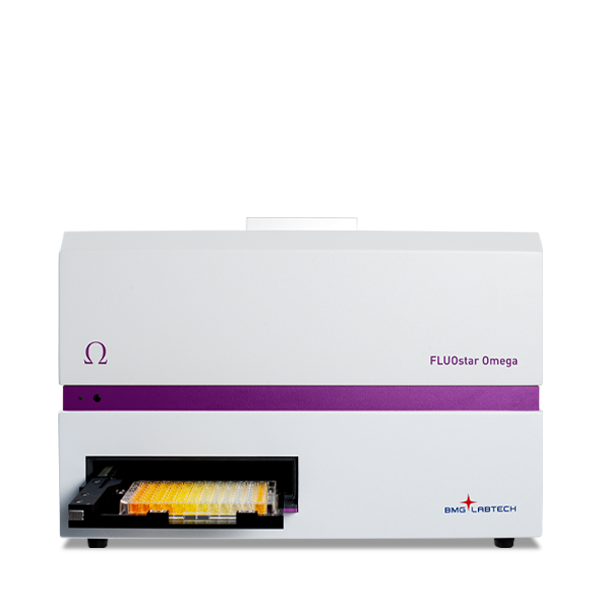
Luminometers that deliver high-sensitivity luminescence detection for both 96- and 384-well plates, combining fast signal acquisition with a wide dynamic range for reliable performance across assays.

Trusted and loved by:customer-logos


Upgradeable Plate Readers from BMG LABTECH

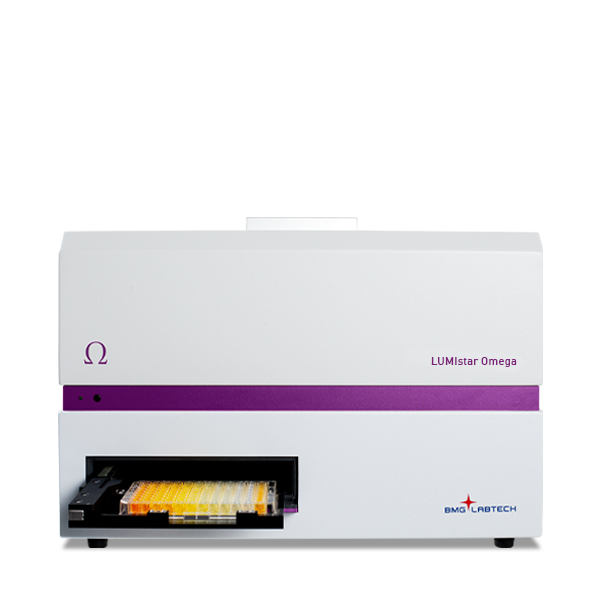
The LUMIstar Omega from BMG LABTECH is a dedicated luminometer plate reader which can be upgraded to also measure fluorescence intensity, fluorescence polarization, absorbance and time-resolved fluorescence.

Key Benefits include:

  • High-sensitivity luminescence detection
  • Fast reading times for high-throughput workflows
  • Robust optical system for stable and accurate results
  • Upgradable architecture for future assay needs
  • Ideal for ATP quantification, reporter assays, and cell viability


Also suitable for the following Applications:

  • ATP assays
  • Reporter gene assays
  • Cell viability & cytotoxicity
  • Enzyme assays
Microplate reader Omega Series

Technical specifications

Detection modes

Luminescence (flash and glow) - incl. BRET

Measurement modes

Top and bottom reading
Endpoint and kinetic
Sequential multi emission
Simultaneous Dual Emission
Ratiometric measurements

Microplate formats

6 to 384-well plates, user-definable

Microplate carrier

Robot compatible

Detectors

Low noise photomultiplier tube

Wavelength selection

Optical filters

Spectral range

Filters
240 - 740 nm for LUM

Sensitivity

LUM
< 20 amol/well ATP

Read times

16 s (96), 47 s (384)

Shaking

Linear, orbital, and double-orbital with user-definable time and speed

Purge gas vent

System to inject an atmosphere or to pull a vacuum into the reader

Incubation

+4 °C above ambient up to 45 °C or 65 °C

The upper heating plate of the incubation chamber operates at 0.5 °C more than the lower plate. This prevents condensation build-up on the lid or sealer

Software

Multi-user Reader Control and MARS Data Analysis Software included
FDA 21 CFR Part 11 compliant

Dimensions

Width: 44 cm, depth: 48 cm, height: 30 cm; weight: 28 kg

Optical filters

Emission filter wheel for 8 filters

Optical path guides

Top: liquid-filled light guides
Bottom: fiber optics

Reagent injection

Up to 2 built-in reagent injectors
Injection at measurement position (6 to 384-well)
Individual injection volumes for each well (3 to 500 µL)
Variable injection speed up to 420 µL/s
Up to four injection events per well
Reagent back flushing

Power requirements
  • 100-240 V, 50/60 Hz, max. peak 300 VA
Power consumption
  • Instrument off:  0 W
  • Normal operating conditions: 25 W
  • Normal operating conditions, incubation set to 37oC: 60 W
Optional Accessories
THERMOstar

Microplate incubator and shaker

Atmospheric control unit

Actively regulates O2 and CO2 0.1-20%

Stacker

Magazines for up to 50 plates - continuous loading feature

Optical filters

Emission filters

Upgrades

Please contact your local representative for upgrades including options such as detection modes, reagent injectors, etc

*

LOD = 3 x SD (20 blanks) / slope (6 pt std curve)
Microplates: white for LUM
96 = 96-well microplates
384 = 384-well microplates

The LUMIstar Omega is for research use only.

 

Application Notes

See how scientists and researchers are using BMG Labtech’s LUMIstar Omega for luminescence measurements.

Frequently asked questions

  • What is a microplate luminometer?

    A microplate luminometer is a laboratory instrument that detects and quantifies light produced by luminescent reactions across multiple samples simultaneously in a microplate format. Unlike fluorescence readers, luminometers do not require an excitation light source - the assay itself generates the signal. This makes them highly sensitive instruments, capable of detecting extremely low levels of light with minimal background interference. They are widely used in drug discovery, cell biology, and molecular research for applications where precision and sensitivity are critical.
  • What types of assays can be performed using a luminometer?

    Microplate luminometers support a broad range of assays based on bioluminescent or chemiluminescent reactions. Common applications include luciferase reporter gene assays (used to study gene expression and promoter activity), ATP quantification assays (used in cell viability and microbial contamination testing), BRET (bioluminescence resonance energy transfer) assays, and chemiluminescent immunoassays. The absence of an excitation light source means luminescence detection has virtually no background fluorescence, making microplate luminometers particularly well suited to low-abundance target detection.
  • How does a luminometer detect light?

    A microplate luminometer detects light using a photomultiplier tube (PMT) - a highly sensitive detector that converts incoming photons into an electrical current. As each microplate well passes under or beside the PMT, the emitted light is captured and amplified, then expressed as relative light units (RLU). The RLU value is proportional to the intensity of the luminescent reaction, allowing quantitative measurement of biological activity. Because the PMT operates in near-total darkness within a sealed reading chamber, even very faint signals can be reliably detected.
  • Are microplate luminometers compatible with different microplate formats?

    Yes. Most microplate luminometers are compatible with standard 96-well and 384-well microplate formats, which cover the majority of routine laboratory assays. For high-throughput screening (HTS) applications, select models - including certain BMG LABTECH instruments - also support 1536-well plates, enabling much larger sample volumes per run. Plate format compatibility is an important consideration when choosing a luminometer, particularly if your workflow involves automation or scaling up to industrial screening volumes.
  • What is dynamic range, and why does it matter in a microplate luminometer?

    Dynamic range refers to the span of signal intensities - from the lowest detectable signal to the highest measurable value - that a microplate luminometer can accurately quantify in a single measurement run. A wide dynamic range is important because luminescent signals in biological assays can vary enormously between samples. If the dynamic range is too narrow, bright samples become saturated and dim samples fall below the detection threshold, both leading to inaccurate results. A broad dynamic range reduces the need for sample dilution, saves time, and improves overall assay accuracy and flexibility - particularly in dose-response experiments where signal intensity varies across a wide concentration gradient.
  • Can a microplate luminometer be integrated into automated laboratory workflows?

    Yes. Microplate luminometers can be integrated into automated laboratory workflows, making them suitable for high-throughput screening (HTS) environments. Integration typically involves compatibility with robotic plate handlers, barcode readers, and laboratory information management systems (LIMS). BMG LABTECH luminometers are designed with automation in mind, supporting external triggering, stacker systems, and software interfaces that allow seamless communication with broader lab automation platforms. This is particularly valuable in pharmaceutical drug discovery and large-scale cell-based screening programmes where hundreds or thousands of plates need to be processed consistently and efficiently.
  • How do I reduce background noise in microplate luminometer readings?

    Background noise in microplate luminometry typically stems from optical cross-talk between wells, ambient light contamination, or non-specific signal in your reagents. Using white plates with individual well walls reduces both cross-talk and signal bleed, while BMG LABTECH's cross-talk reduction package provides additional hardware and software-level control. Always use an opaque plate seal, keep the reading chamber free from ambient light before and during measurement, and include blank wells in every run to identify and subtract any residual background during analysis.
Newsletter Sign-up