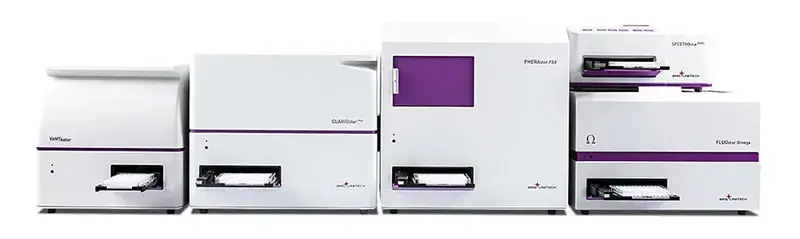






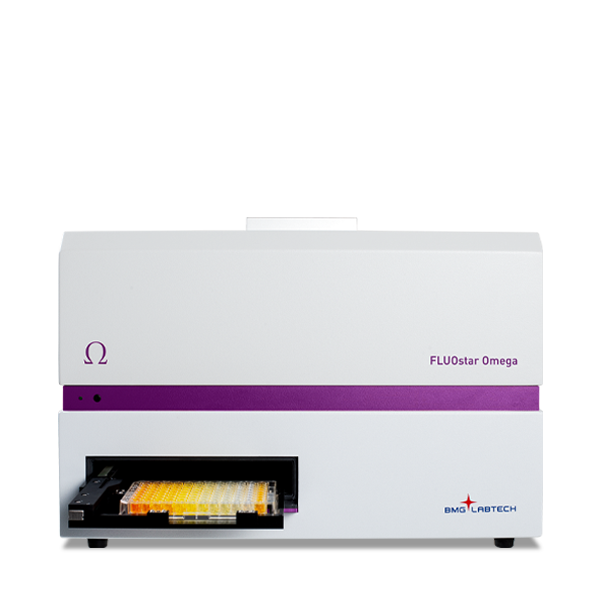

A high throughput screening plate reader is an indispensable tool for researchers looking to perform screening campaigns. High throughput screening plate readers play an essential role in the drug discovery process and are widely used to support applications ranging from protein-protein interactions, kinetic binding assays, and compound and inhibitor screening to DNA, enzyme activity and kinetic assays, cell-based assays and reporter gene assays. They are often used to study G protein-coupled cell receptors and ion channels as well as the many enzymes and other molecules that contribute to biology. Different types of binding assays, including those for receptor-ligand interactions and receptor-ligand kinetics, are often used in screening.
A high throughput screening plate reader is a multi-mode reader intended to perform all the leading detection technologies from fluorescence intensity and FRET detection to flash and glow luminescence (including BRET). Advanced detection modes such as fluorescence polarization or time-resolved fluorescence and TR-FRET as well as AlphaScreen technologies are readily performed in all microplate formats up to 3456 wells.
Typically, high throughput screening plate readers offer selectable options for different light sources (laser or high energy flash lamp), high transmission filters as needed, and multiple photomultiplier tubes for simultaneous detection of light signals. The photomultiplier tube or PMT converts photons generated by different assays into a signal that is quantified by the microplate reader.
Screening facilities can process hundreds of 1536-well, 3456-well or other microplates every day. High throughput screening plate readers that offer the highest throughput and performance and which offer automation compatibility are therefore highly sought after. Multi-mode readers that provide these features are used to support the many assays available to researchers for their drug discovery and screening applications.
- Initial recommendation
- Detailed Recommendation
Get help selecting the right microplate reader
Configure your microplate reader and get an initial recommendation!

Do you need a high throughput screening plate reader for your laboratory?
Request a quote or more information here:
If you are on the market for a new high throughput screening plate reader, there are a few factors to consider, as the performance of the instrument can significantly affect the quality of your screening results.
Sensitivity
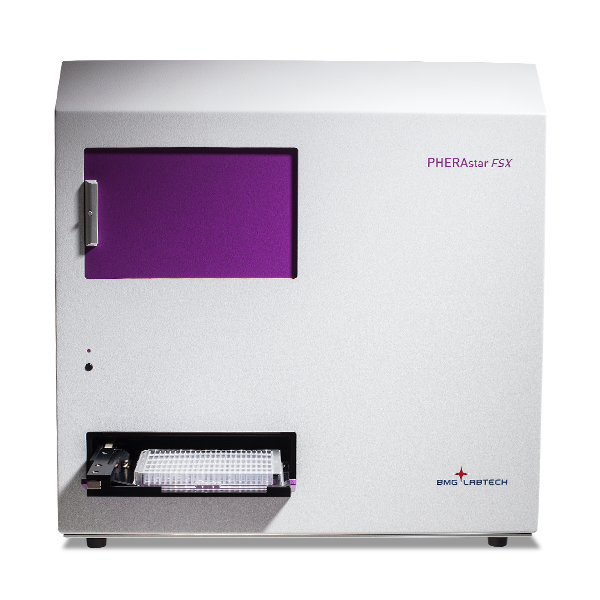
A high throughput screening plate reader that combines fast read times with the sensitivity needed to read small volumes of samples is necessary for high throughput screening. A user can always find the best combination of sensitivity and speed by choosing the number of excitation flashes, and that sensitivity is critical when working with small volumes in miniaturized screening formats while low-volume, high-density plates also reduce reagents used per well. In single flash mode, the PHERAstar FSX microplate can measure a 1536-well plate in 27 seconds.
Simultaneous Dual Emission
Your time and the instrument’s flexibility matter. Simultaneous Dual Emission halves the read time and improves data quality for all dual emission assays, such as FRET, TR-FRET, fluorescence polarization, and BRET, as the reader can detect two emission wavelengths in a single measurement.
Enhanced Dynamic Range
Fluorescence and luminescence assays can produce signals ranging from very weak to extremely bright intensity. A limited dynamic range may cause weak signals to be lost in background noise, lowering the signal to noise ratio, and strong signals to saturate the detector.
A wide dynamic range allows the reader to measure samples with substantially different signal intensities in the same run. This can reduce the need for repeated dilutions and help researchers avoid unnecessary assay optimization.
In these cases, measuring every sample in a single run using the same settings can be challenging. Very bright samples may saturate the detector of the microplate reader. Very weak signals may be indistinguishable from the blank samples.
The Enhanced Dynamic Range feature on the PHERAstar FSX offers the largest possible dynamic range on the market (8 concentration decades), and makes it possible to automatically measure assays with very strong signals and dim signals in the same measurement – no adjustment required, making it especially suitable for assays with samples spanning very different signal levels.
Sampling rate
Sampling rates of 100 data points per second are possible on the PHERAstar FSX. This is particularly useful for resolving fast kinetic processes and for generating higher density datasets of interaction events.
Range of throughput options and automation
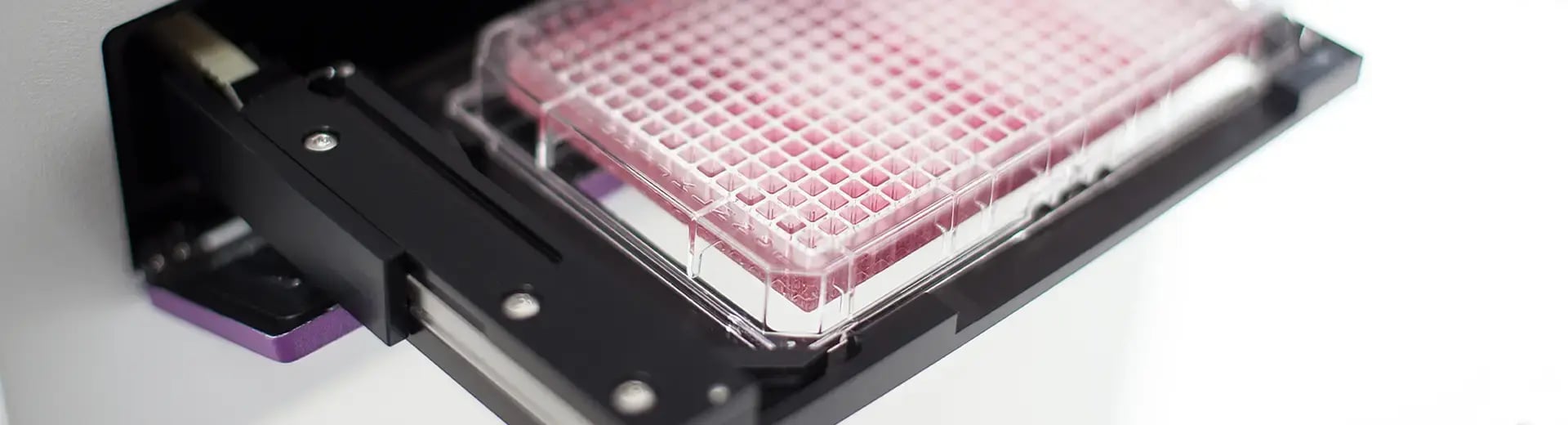
BMG LABTECH’s PHERAstar FSX microplate reader offers excellent robotic integration capabilities as part of an HTS system (high throughput system), along with multi-user control, digital signature and FDA 21 CFR part 11 compliance. Robotic software interface permits easy integration into all leading robotic platforms, allowing an assay plate to be moved between stations for reagent addition, mixing, incubation and detection. This accelerates measurements and is particularly useful for screening campaigns. In addition, it provides support for 96-, 384-, 1536- and 3456-well microplate formats, helping HTS experiments be carried out at scale.
Lasers and high energy xenon flash lamp
Depending on the application, it is useful if users of a high throughput screening plate reader can choose from different light sources. A high energy xenon flash lamp, laser for TRF/TR-FRET, and a laser for AlphaScreen offer the best performance for the different types of assay options. With 60 laser flashes per second, the TRF laser on the PHERAstar FSX allows ultra-fast TR-FRET kinetic measurements, and even “flying mode” detection.
Advanced Assay Stability
An Advanced Assay Stability (AAS) system is a useful option for a high throughput screening plate reader to prevent environmental fluctuations from affecting assay performance, enabling consistent conditions throughout entire batches or screening campaigns. The Advanced Assay System from BMG LABTECH maintains constant temperatures between 18 and 45 °C by automatically heating or cooling the measurement chamber.
Reagent injectors
When looking for a high throughput screening plate reader, you should consider the nature of the assay you want to run, especially when injectors support rapid delivery of reagents and chemical additions during kinetic workflows. The use of reagent injectors can be beneficial for protein-protein interactions, kinetic and other binding assays, including those for receptor-ligand interactions and receptor-ligand kinetics, compound and inhibitor screening, DNA, enzyme activity and kinetic assays, as well as cell-based assays and reporter gene assays. The PHERAstar FSX, our high throughput screening plate reader, equipped with reagent injectors can simultaneously inject and detect the signal of a well, enabling immediate measurement after injection in experiments where each tested compound must be read under tightly controlled timing, and then move to the next one.
Software for data reduction
The PHERAstar FSX software package provides an extensive range of possibilities for both test protocol definitions and data analysis, including quality control for HTS assays, and is fully compliant with FDA regulation 21 CFR Part 11. The control software allows users to define instrument parameters and test protocols.
On the BMG LABTECH software package, the most common assays have predefined quick-run assay-specific protocols and dedicated analysis templates. High-quality HTS assays depend on effective positive control and negative control design, while metrics such as Z-factor and SSMD are used to evaluate quality control and identify issues before hits are identified. Through these dedicated solutions, acquisition and analysis of your results are performed with a single mouse click, enabling researchers to carry out experiments quickly and easily.
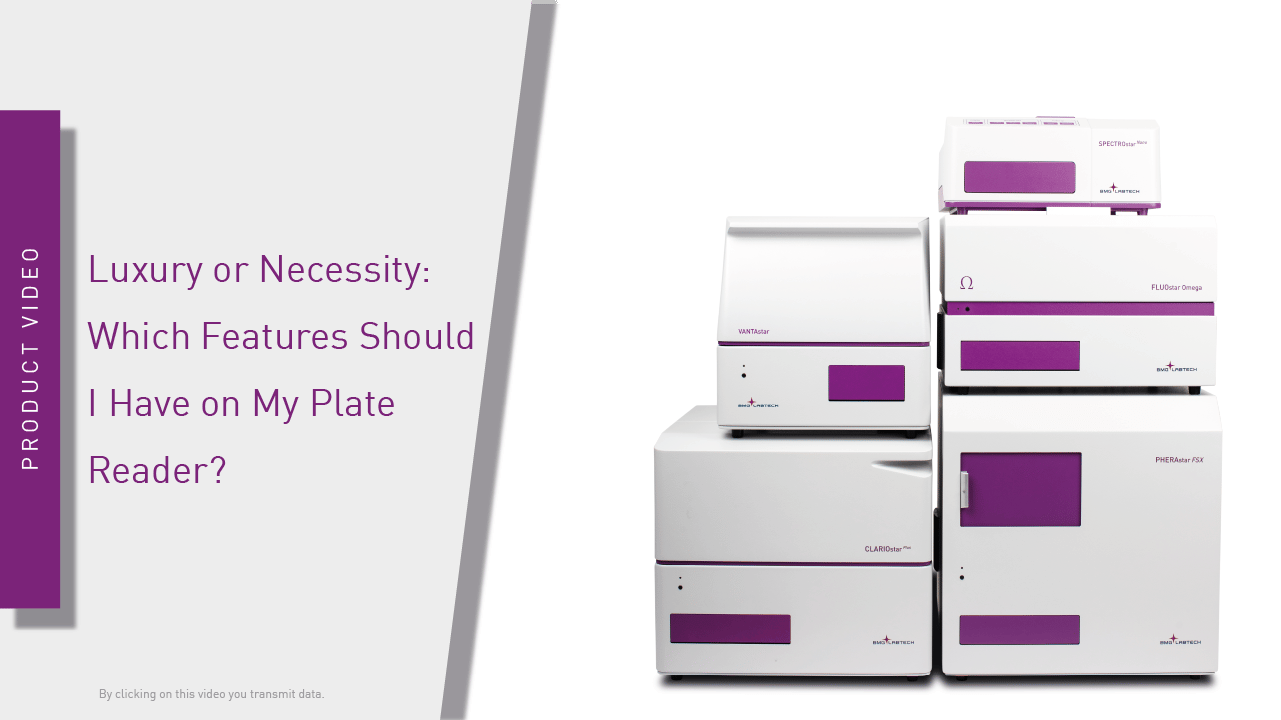
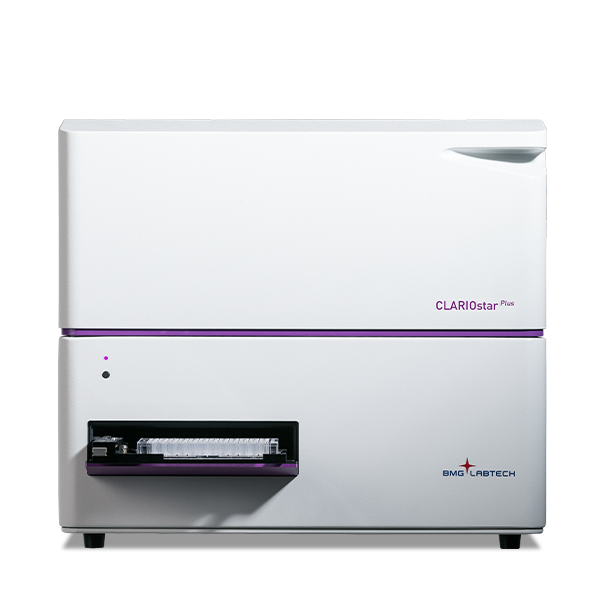
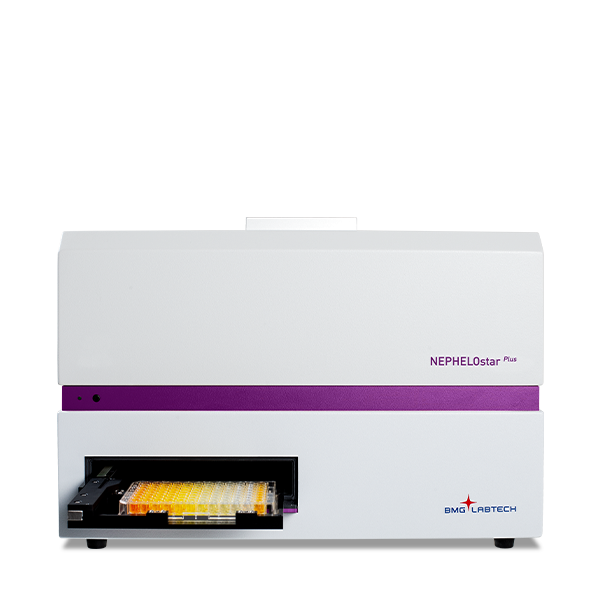
Our high throughput screening plate readers
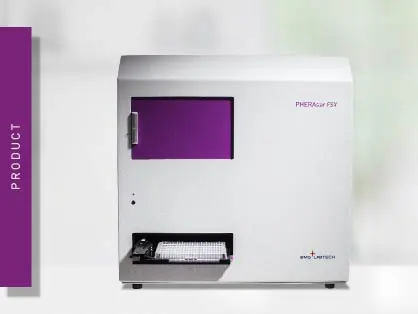
High throughput screening detection can be performed on the PHERAstar FSX microplate reader.

Trusted and loved by:
Which assays can be measured by a high throughput screening plate reader?
High throughput screening readers can support a wide range of applications, including:
Protein-protein interactions
- AN387: Hit validation from fluorescence screening | BMG LABTECH (fluorescence polarization)
- AN357: Protein-protein interaction assay for re-purposed drugs | BMG LABTECH (AlphaScreen)
- AN398: dTAG Assay for Targeted Degradation of Proteins | BMG LABTECH (luminescence)
Kinetic binding assays
- AN348: Measurement of kinase inhibitor residence time | BMG LABTECH (TR-FRET)
- AN317: VEGF binding to VEGFR2 receptor using NanoBRET | BMG LABTECH (luminescence)
Compound and inhibitor screening including compound library collections of small molecules relevant to drug development
- AN402: Adaptation of a potassium channel assay to enable HTS | BMG LABTECH (fluorescence)
- AN141: ADP Hunter kinase inhibitor screen | BMG LABTECH (fluorescence)
- AN247: HDAC assay for histone deacetylase inhibitors | BMG LABTECH (luminescence)
- AN304: CSN5 Ubiquitination Inhibitor for Cancer Treatment | BMG LABTECH (TR-FRET; fluorescence polarization)
Enzyme activity and kinetic assays
Cell-based assays for applications including biomedical research, cell function, disease biology, and hit characterization
- AN266: Celltiter-Glo, EnduRen & ViviRen Measurements | BMG LABTECH (luminescence)
- AN229: PathHunter assays for GPCRs and kinases | BMG LABTECH (luminescence)
Reporter gene assays
You can read more in the following BMG LABTECH blog articles:
Why choose a BMG LABTECH high throughput screening plate reader?
BMG LABTECH specializes exclusively in the production of microplate readers and has more than 30 years of expertise in microplate reader technology. This is reflected in the results that our instruments deliver - the only factor that counts in your laboratory! BMG LABTECH users can trust that they will obtain the best results in sensitivity, speed, throughput and flexibility. Our readers are employed in demanding screening environments where robust performance and reproducible data are essential, and are suitable for both routine screening and advanced assay workflows. Moreover, our multi-mode microplate readers are developed to provide high performance for years. Our instruments are developed, produced and tested in Germany and are built to be extremely robust and reliable.
Buy only what you need
Due to their modularity, all our microplate readers can be equipped with different detection modes and cover a multitude of applications, while modular optic configurations give laboratories the capability to adapt the reader to changing assay needs. Our PHERAstar FSX high throughput screening plate reader uses optic modules that contain all the components required for a specific assay such as excitation and emission filters, dichroic filters, beam splitters and polarization filters, and this flexibility supports generation after generation of assay formats and detection workflows. You can easily add or replace them as needed. Additional features can be upgraded at any time. This gives you the chance to keep your options open even if you don’t use the full scope of your microplate reader right at the offset.
All-round service and support
We strive to provide you with the very best customer service. All sales area representatives are highly trained technical specialists able to support both the hardware, software and most application questions, and our application team can also support assay optimization methods and help identify suitable setups for new workflows. For the most complex applications solutions a team of dedicated application specialists are also available, providing solution-oriented support for complex screening applications.
Multi-user software package
All our instruments come with a multi-user integrated software package that supports experiment setup, analysis, and secure multi-user access, and can be installed on as many computers as users require, without the need to purchase licenses. Shared access helps labs manage workflows for many assay types in one place. Software updates for our microplate readers are free of charge within the first 12 months after purchase.

Frequently asked questions
-
What is a high throughput screening plate reader?
A high throughput screening plate reader is a laboratory instrument that rapidly measures signals from many samples arranged in microplates. It helps researchers evaluate large numbers of compounds, biological samples, or experimental conditions efficiently. -
How does a high throughput screening plate reader work?
A high throughput screening plate reader directs light at each well, then measures the resulting signal—such as absorbance, fluorescence, or luminescence—with a detector. Software converts the measurements into data for analysis. -
What type of assays can be performed using a high throughput screening plate reader?
A wide range of assays are possible on a high throughput screening plate reader including enzyme activity, binding, reporter-gene, cell viability, and biochemical assays. -
What are the essential features to consider when choosing a high throughput screening plate reader?
Sensitivity, fast read times as well as the flexibility to perform a wide variety of assays are essential features for considerations when choosing a high throughput screening plate reader. -
Can a high throughput screening plate reader be integrated with other laboratory equipment?
Yes. High throughput screening plate readers can be integrated with liquid handlers, robotic arms, incubators, plate stackers, and laboratory automation and information systems. -
How do BMG LABTECH's high throughput screening plate readers stand out in the market?
BMG LABTECH’s instruments are known for their high sensitivity, customizable configurations, robustly built qualities, user-friendly interfaces, and advanced data analysis features tailored for diverse research needs. -
Which plate formats are compatible with workflows on high throughput screening plate readers?
High throughput screening plate readers support high throughput screening formats such as 96-, 384-, 1536-, and 3456-well plates, with optional adapters and accessories for specialized plates. -
Can I run kinetic or time-resolved assays on high throughput screening plate readers?
Yes. It is possible to configure kinetic readouts, time-resolved fluorescence (TRF), or time courses to capture dynamic effects on high throughput screening plate readers.