microplate-reader-header microplate-reader-header-mobile

Choosing the best microplate reader

Microplate reader selection requires more than comparing instrument specifications. From routine ELISAs to advanced screening applications the right instrument should support your current and future research needs.

Why choosing the best microplate reader matters

Microplate readers have become indispensable tools in modern life science laboratories. They are used to quantify biological, chemical, and biochemical reactions in microplates and support a wide range of applications, from routine protein and DNA quantification to complex cell-based assays and high-throughput screening campaigns.

As research workflows become increasingly complex, laboratories often expect a single instrument to perform multiple functions. Researchers may need to measure absorbance assays one day, perform fluorescent cell assays the next, and analyse luminescence signals from gene reporter assays a few hours later. As a result, choosing the best microplate reader is no longer simply a question of selecting an instrument with the right detection mode. It is about finding a platform that aligns with current goals while having enough flexibility to support future needs.

A well-chosen plate reader can increase laboratory productivity, reduce bottlenecks, improve assay performance, and ultimately generate higher-quality data. Conversely, selecting an instrument based solely on current requirements may create limitations as research priorities evolve.

This guide highlights the main factors to consider when selecting a microplate reader and explains how different features can influence assay performance, efficiency, and long-term scientific success.


Start with your applications

The first question when choosing the best microplate reader should always be: which assays do I want to perform?

Most laboratories already have an established set of applications before investing in a new instrument. These may include ELISAs, protein quantification assays, nucleic acid measurements, microbial growth monitoring, enzyme kinetics, cell viability studies, and reporter gene assays. For some laboratories, these routine applications represent most of their work and are unlikely to change over time.

Other facilities operate in more dynamic research environments. Assay development groups, core facilities, biotechs, and pharmaceutical research laboratories frequently encounter new applications and changing project requirements. In these settings, flexibility can be just as important as performance.

Before evaluating specific instruments, researchers should therefore consider not only the assays they run today, but also the studies they may wish to conduct in the future. New collaborations, funding opportunities, or technological advances can quickly expand requirements beyond the original purchase criteria.

luxury-or-necessity-webinar

Which detection modes do I need?

Once the relevant applications have been identified, the next step is determining which detection modes are required.

Different assay types rely on different detection modes, making this one of the most important aspects of choosing the best microplate reader.


Standard Detection Modes

Absorbance

Absorbance remains one of the most widely used detection technologies in life science laboratories and includes applications such as ELISAs, Bradford assays, BCA assays, Lowry protein quantification, nucleic acid measurements, and OD600 microbial growth. 

When evaluating an absorbance microplate reader, researchers should consider wavelength range and selection technology. Filter-based systems are ideal for laboratories running routine assays, whereas readers incorporating UV/vis spectrometers allow users to select virtually any wavelength or acquire a full spectrum in < 1 second/well without changing hardware components, providing greater flexibility for method development and future assays.


Fluorescence intensity

Fluorescence intensity has become one of the most important detection modes because it offers significantly greater sensitivity than absorbance.

Fluorescence-based assays are widely used in cell biology, molecular biology, biochemistry, and drug discovery to measure cell viability, enzyme activity, intracellular signaling, reactive oxygen species, protein interactions, and nucleic acid concentrations. 

The sensitivity of fluorescence measurements depends heavily on optical design. Instruments with LVF Monochromator technology provide researchers with the ability to access both filter-like sensitivity and monochromator flexibility in one system.
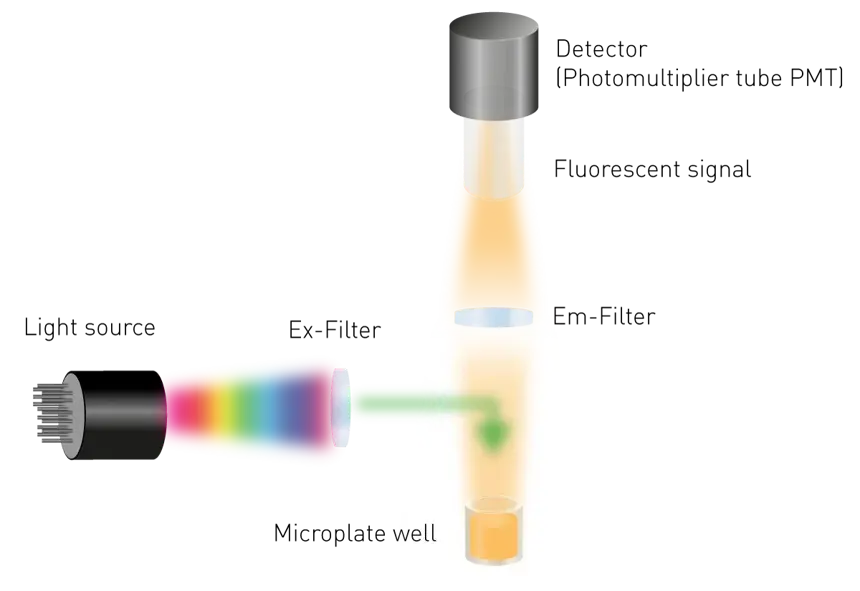
Fig. 1: Simplified set-up of a fluorescence intensity detection system in a microplate reader.


Luminescence

Luminescence is frequently considered the most sensitive detection technology available on a microplate reader. Because there is no excitation source, background interference is minimised, resulting in exceptional sensitivity and broad dynamic range. This makes luminescence plate readers particularly attractive for ATP assays, luciferase reporter gene assays, receptor-ligand interaction studies, cell viability measurements, and many drug discovery applications.


Advanced detection modes 

While absorbance, fluorescence intensity, and luminescence cover most routine laboratory requirements, advanced research applications often require specialized technologies.


Fluorescence Polarization

Fluorescence polarization is commonly used to study molecular interactions and binding events. Because changes in polarization are directly related to molecular size and mobility, this technology has become a valuable tool for competitive binding assays, receptor studies, and enzyme activity measurements.
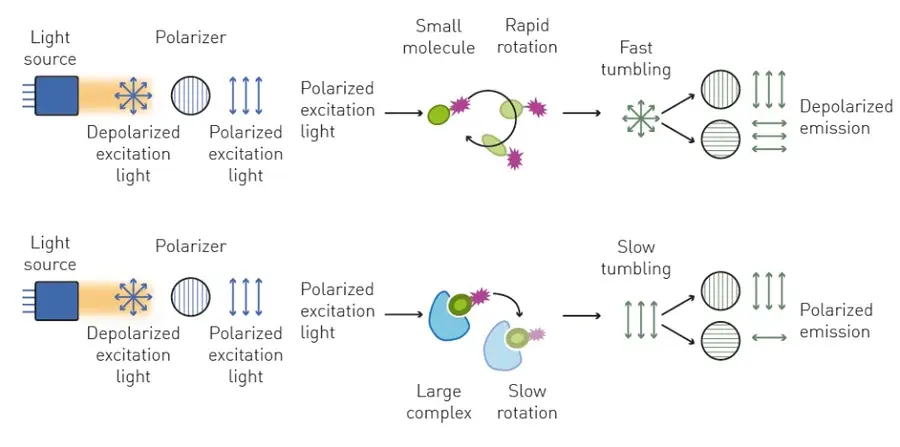
Fig. 2: Polarized excitation light is depolarized by rapidly rotating small molecules bound to a fluorophore. Larger complexes rotate slower and hence emit prevalently polarised light.


Time-resolved fluorescence (TRF) & TR-FRET

By introducing a delay between excitation and measurement, Time-resolved fluorescence (TRF) significantly reduces background noise and improves assay sensitivity. This makes it particularly useful for biomarker detection, immunoassays, and cellular metabolism studies.

TR-FRET combines time-resolved fluorescence with Förster resonance energy transfer and has become a powerful technique for studying protein-protein interactions, receptor binding events, kinase activity, and high-throughput screening assays especially in pharmaceutical and biotechnology research.
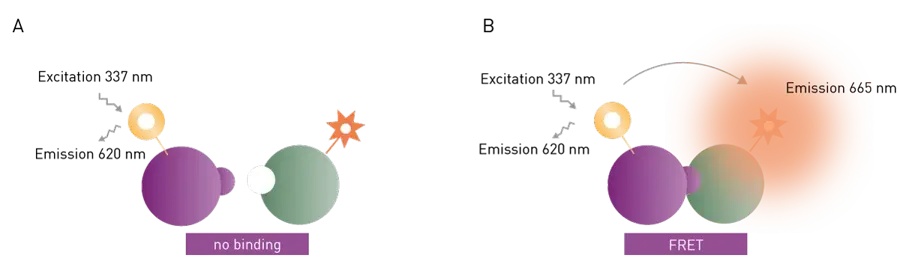
Fig. 3: Schematic representation of excitation and emission in a europium-red-acceptor based TR-FRET assay. In case of no interaction, the donor is excited at 320 nm and emits at 620 nm. In case of interaction and FRET taking place, the acceptor additionally emits at 665 nm.


AlphaScreen

AlphaScreen® and AlphaLISA® technologies have also become widely adopted in drug discovery and assay development because they enable highly sensitive, homogeneous assays without washing steps. Laboratories planning to enter these application areas should ensure that their chosen reader supports such technologies.


Nephelometry

Nephelometry is a light-scattering technique used to detect and quantify insoluble particles suspended in a solution. Unlike absorbance measurements, which quantify light passing through a sample, nephelometry measures the light scattered by particles present in the well. Nephelometry is widely used to assess compound solubility, aggregation, and precipitation. 

Sensitivity or flexibility: filters versus monochromators

One consideration that is often overlooked when choosing the best microplate reader is the optical technology used for wavelength selection.
Filter-based readers are traditionally regarded as the benchmark for assay sensitivity. Optical filters transmit very specific wavelength ranges with high light transmission, making them particularly advantageous for demanding applications such as TR-FRET, or AlphaScreen®.

Monochromator-based readers offer a different advantage. Instead of relying on multiple dedicated filters, monochromators allow researchers to freely select excitation and emission wavelengths. Readers with monochromators enable in addition excitation and emission spectral scanning. This flexibility makes them particularly attractive for assay development laboratories and facilities that frequently use different fluorophores and assay chemistries.

BMG LABTECH’s patented LVF Monochromator uses linear variable filters to the select light of distinct wavelengths and bandwidths.
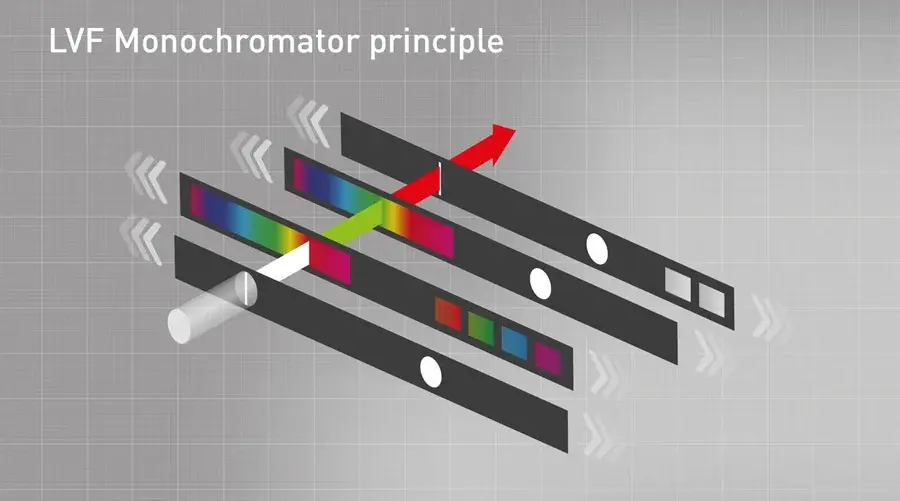
Fig. 4: BMG LABTECH’s patented LVF Monochromator uses linear variable filters to select light of distinct wavelengths and bandwidths.

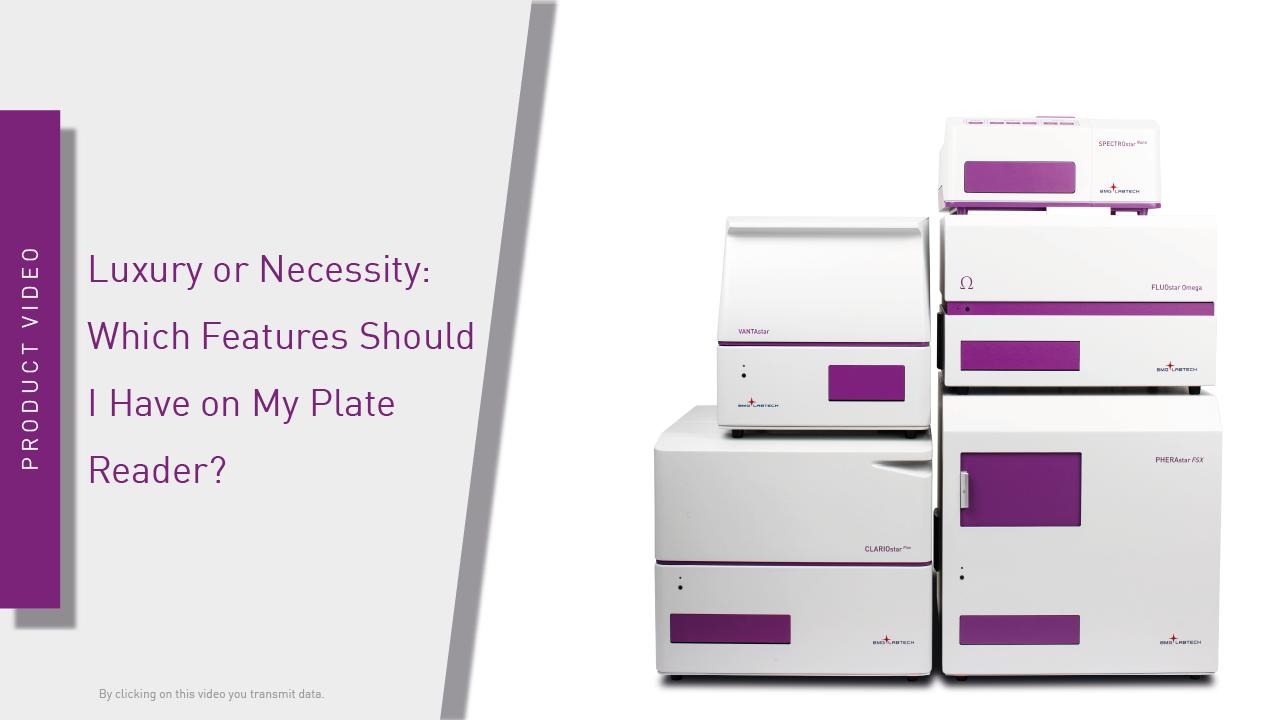
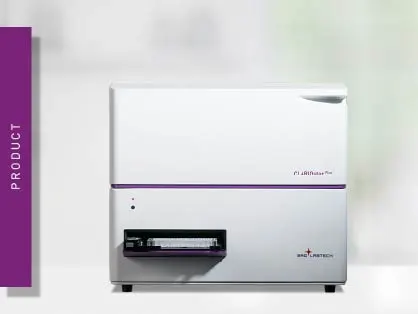
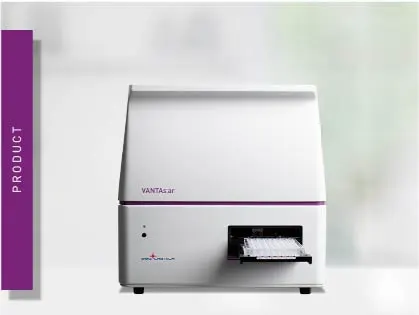
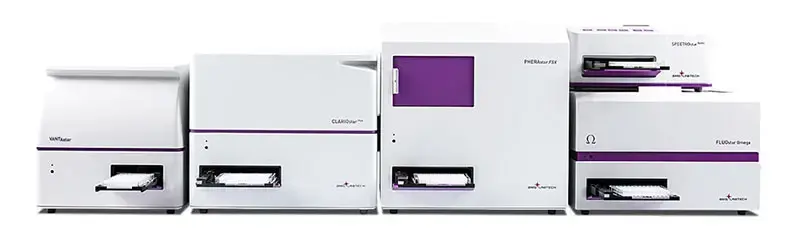
Modern microplate readers such as the VANTAstar and CLARIOstar Plus can combine both technologies in a single instrument. This approach allows researchers to maximize sensitivity when required while maintaining the flexibility needed for future assay development.


Single-mode or multi-mode reader?

Another important decision is whether a single-mode or multi-mode reader best suits laboratory requirements.

Single-mode readers are designed around a specific detection technology and are particularly useful when measurements are highly standardized and unlikely to change. Laboratories performing routine assays or specialized long-term kinetics often benefit from the simplicity and cost-effectiveness of a dedicated instrument.

Multi-mode readers offer significantly greater flexibility. By combining absorbance, fluorescence, luminescence, and often advanced technologies within a single platform, they allow researchers to support a broad range of applications without investing in multiple instruments.

For laboratories with multiple users, diverse research areas, or evolving project portfolios, a multi-mode platform often represents the most cost-effective long-term solution. It reduces instrument footprint, simplifies training requirements, and enables researchers to adapt quickly to new scientific challenges.


Will you run live-cell assays?

Many emerging research areas require measurements under physiologically relevant conditions. Traditional endpoint assays provide only a snapshot of cellular behaviour, whereas live-cell assays allow researchers to monitor dynamic biological processes over time.

When selecting a microplate reader for live-cell applications, environmental control becomes increasingly important. Temperature regulation alone may not be sufficient. Researchers may also require precise control of CO₂ and O₂ concentrations. For instance, the Atmospheric Control Unit mimics physiological conditions and maintains healthy cell cultures during long kinetic experiments.

These capabilities are particularly valuable in fields such as cell biology, cancer research, immunology, neuroscience, and metabolism research, where cellular responses can change significantly over time.
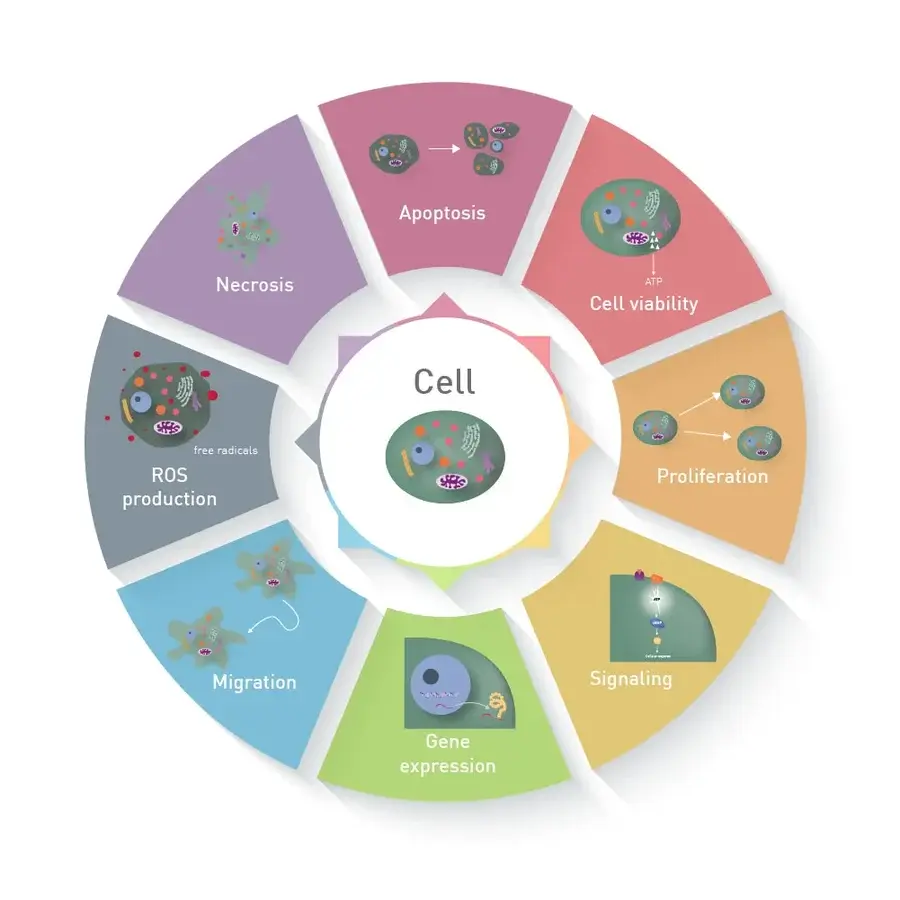
Fig. 5: Cellular processes, employed to study effects in cell-based assays.

Microplate readers capable of combining environmental control with kinetic measurements allow researchers to monitor biological processes continuously without disrupting the experimental system.


Throughput and automation requirements

Laboratories vary considerably in the number of samples they process. Some academic research groups analyse a handful of 96-well microplates per week, while screening facilities may process hundreds of 1536-well plates every day.

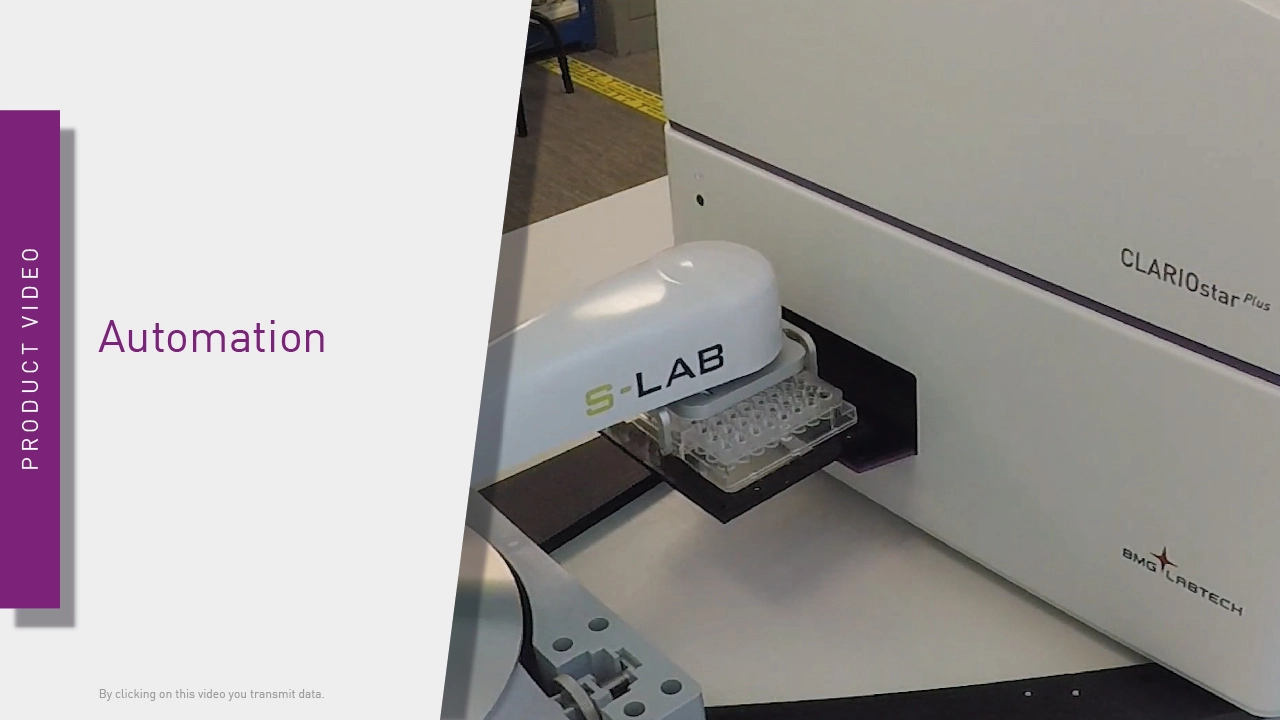
Throughput requirements influence several aspects of instrument selection, including measurement speed, plate format compatibility, automation readiness, and data processing capabilities. A laboratory conducting occasional measurements will have different requirements than a pharmaceutical company running large-scale drug screening campaigns in 1536-well formats.

Automation compatibility becomes increasingly important as throughput increases. Readers that integrate seamlessly with liquid handling systems, robotic workstations, stackers, and automated incubators can significantly improve efficiency while reducing operator variability.

Researchers planning for future growth should therefore consider both current sample volumes and anticipated throughput requirements when choosing the best microplate reader.
automation-thumbnail

Software and user experience

The capabilities of a microplate reader extend far beyond hardware specifications. Software increasingly plays a central role in experiment design, data acquisition, workflow management, and result interpretation.

Modern laboratories expect software to automate calculations, simplify assay setup, support kinetic measurements, generate publication-ready data, and facilitate regulatory compliance where necessary. Intuitive software can dramatically reduce training requirements and improve productivity across multiple users.

When evaluating instruments, researchers should therefore assess not only performance but also ease of use of the software and its licensing scheme to avoid hidden costs.


Future-proofing your investment

Microplate readers are long-term investments. A system selected today may remain in service for many years and support hundreds of research projects during its lifetime.

For this reason, future flexibility should be a key consideration. Laboratories should ask themselves whether additional detection modes may become necessary, whether throughput requirements are likely to increase, whether live-cell assays are anticipated, and whether future projects may require greater sensitivity or automation capabilities.

Upgradeable platforms can provide substantial advantages by allowing laboratories to adapt to new scientific demands without replacing their existing instrument. Such flexibility can reduce long-term costs while ensuring that the reader remains relevant as research priorities evolve.

All BMG LABTECH microplate readers

Get help selecting the right microplate reader

Configure your microplate reader and get an initial recommendation!
Choosing the best microplate reader for long-term success

Ultimately, choosing the best microplate reader requires balancing application requirements, sensitivity, flexibility, throughput, and future growth plans. There is no universal instrument that is ideal for every laboratory, but there is usually a solution that aligns closely with a laboratory's scientific goals.
By carefully evaluating applications, detection technologies, optical performance, environmental control requirements, software functionality, and future scalability, researchers can select a microplate reader that delivers reliable data today while remaining ready for tomorrow's challenges. The result is an instrument that not only supports current experiments but also serves as a valuable platform for future scientific discovery.


Frequently asked questions

  • What is a microplate reader and what can it measure?

    A microplate reader measures optical signals from assays in microplates, typically absorbance, fluorescence, or luminescence signals.
  • What are the important criteria for selecting a microplate reader?

    Some of the key factors include the type of assays you plan to perform, detection modes required, throughput needs, sensitivity, and compatibility with existing laboratory equipment.
  • How does detection mode influence the selection of a microplate reader?

    Detection modes such as absorbance, fluorescence, luminescence, or other more advanced detection options determine the capabilities of the reader. Choose a reader that supports all necessary modes for your assays.
  • Why is throughput an important consideration in selecting a microplate reader?

    Throughput impacts efficiency; high-throughput readers enable rapid processing of many samples simultaneously, which is essential for large-scale studies or screening applications.
  • What are the benefits of choosing a modular microplate reader system?

    Modular systems offer flexibility to upgrade or customize detection modes and accessories according to evolving research needs.
  • How crucial is detection sensitivity?

    Very crucial for low-signal assays (e.g., faint fluorescence or low luminescence). Higher sensitivity expands assay options and reduces sample requirements.
  • Do I need automation features like plate stacking or shaker?

    If you process large workloads or automate workflows, features such as plate stacking, incubators, or orbital shakers can be very beneficial.
  • Are there specific features to look for in advanced microplate readers?

    Features such as temperature control, kinetic measurement capabilities, and multi-mode detection can enhance versatility and experimental precision.
  • How important is user interface design and software in selecting a microplate reader?

    An intuitive user and software interface simplifies operation, reduces training time, and minimizes user errors during experiments.
  • Can a microplate reader be used for cell-based assays?

    Yes, particularly fluorescence and luminescence readers, which support studies such as viability, cytotoxicity, and reporter assays in cells.
Newsletter Sign-up