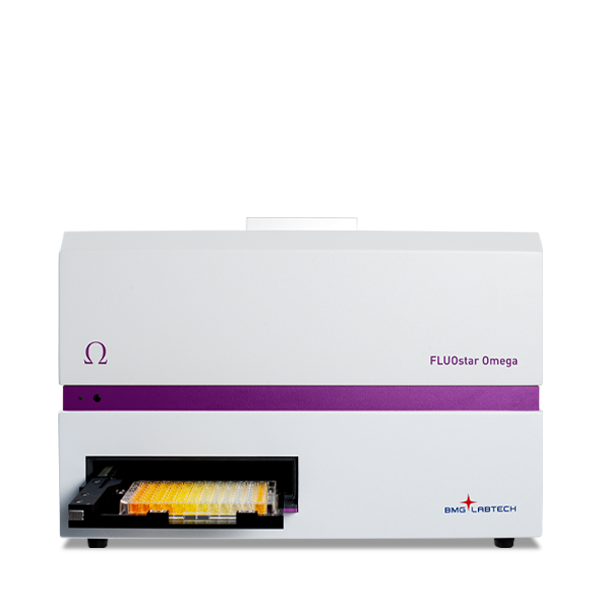
Explore BMG LABTECH's 96-well plate readers, designed for precise and efficient detection in various assays. Ideal for research labs, these readers offer advanced features and reliable performance.
Modular and upgradeable, they can fulfil your future requirements, evolving with your future lab needs and supporting new projects and application changes
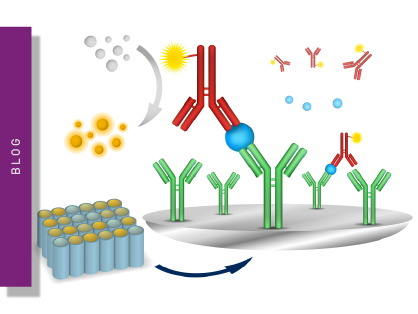
ELISAs are irreplaceable tools in the life sciences. This article explains the principle of ELISA assays and presents adjustments for optimal performance.
We all heard of them: BCA assay, Bradford assay, Lowry assay. But which assay is best for me to choose for protein quantification? Find some decision support in this article.
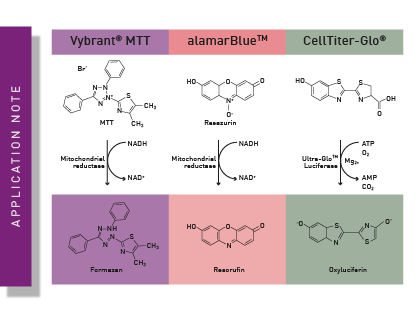
Not sure which cell viability assay is the best choice for you? This AppNote compares different kits based on absorbance, fluorescence and luminescence readouts.
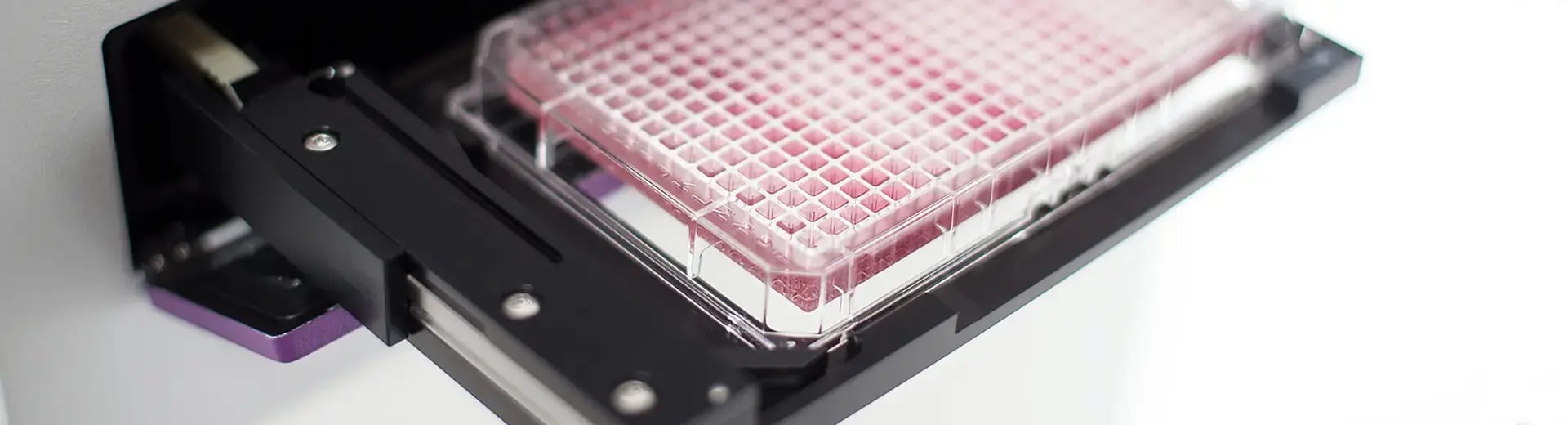
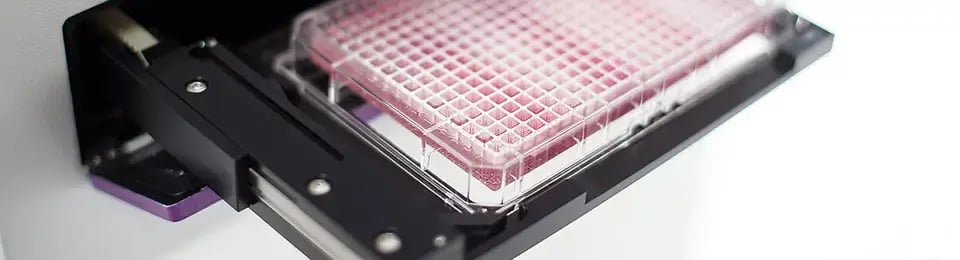
A 96 well plate reader is a laboratory instrument that measures optical signals - such as absorbance, fluorescence or luminescence - from samples arranged in a 96‑well microplate. It is widely used for ELISA, protein and nucleic acid quantification, cell viability assays and many other life science applications.
What is the difference between a 96 well plate reader and a spectrophotometer?
A traditional spectrophotometer typically measures one sample in a cuvette at a time, while a 96 well plate reader measures up to 96 samples in parallel in a microplate. Many 96 well readers combine spectrophotometric absorbance detection with fluorescence and luminescence, making them multi‑mode microplate readers rather than single‑purpose spectrophotometers.
Can a 96 well plate reader be used for ELISA?
Yes. A 96 well plate reader is the standard instrument for ELISA, using absorbance detection at specific wavelengths (for example 450 nm with a reference at 620–690 nm). BMG LABTECH readers support dedicated ELISA protocols, kinetic and endpoint reads, and plate layouts optimised for 96‑well immunoassays, effectively functioning as an ELISA 96 well plate reader.
What detection modes are available on a 96 well microplate reader?
Modern 96 well microplate readers can support multiple detection modes, including absorbance (UV–Vis), fluorescence, luminescence, time‑resolved fluorescence (TRF), TR‑FRET. This multi‑mode capability allows one instrument to cover many different assay types in a 96‑well format.
How do I choose the right 96 well plate reader for my lab?
Key factors include detection modes (absorbance only vs multi‑mode), sensitivity, dynamic range, wavelength and throughput. For routine ELISA and protein assays, an absorbance‑focused 96 well spectrophotometer may suffice; for cell‑based and complex assays, a multi‑mode 96 well plate fluorescence and luminescence reader is usually preferable.
What is the typical sample volume for a 96 well plate?
For standard 96‑well plates, typical sample volumes are around 100–200 µL per well, depending on the assay and plate geometry. Using appropriate volumes helps ensure consistent optical path length and reliable absorbance, fluorescence and luminescence measurements.