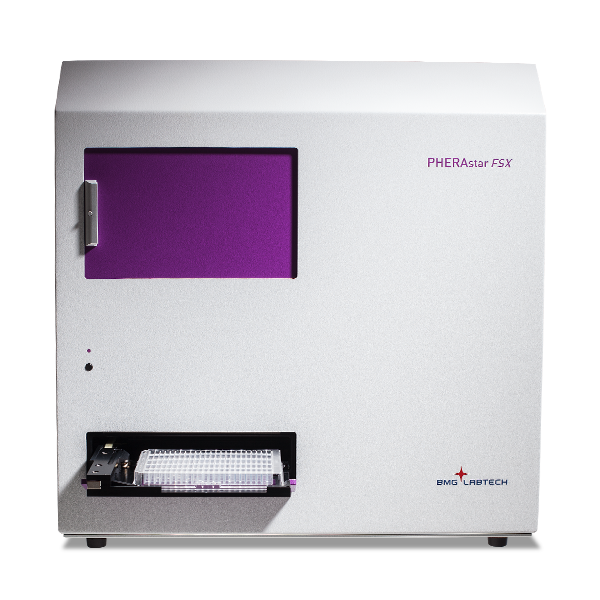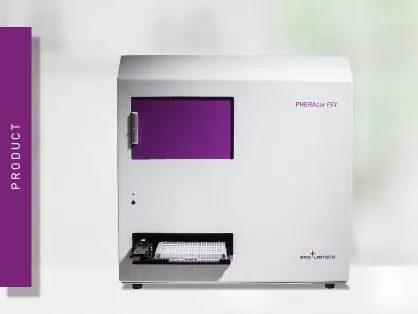
PHERAstar FSX
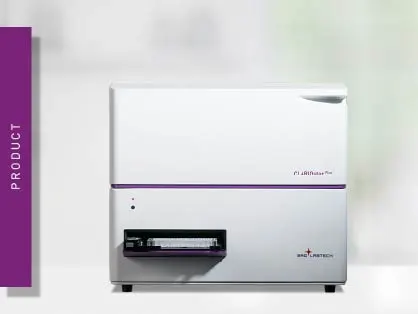
Powerful and most sensitive HTS plate reader





Dr. Ann Cathrin Volz is a trained nutritionist with deep expertise in cell biology, biomaterials and food science. She studied Molecular Nutritional Sciences at the University of Hohenheim, where she completed her PhD developing a serum-free in vitro model of adipose tissue. During her scientific training, she combined academic biochemistry with practical laboratory work in bioengineering. After completing her doctorate, she spent two years as a postdoctoral researcher at Reutlingen University, where she focused on transferring her knowledge of tissue engineering from biomedicine to the field of in vitro agriculture. In 2020 Ann-Cathrin joined BMG LABTECH as an Applications Specialist, where she authors application notes, conducts workshops, and supports scientific customers.

pH-Xtra has been discontinued by Agilent.
Metabolic perturbations play a critical role in a variety of disease states and toxicities. Knowledge of the interplay between the two main cellular ATP generating pathways, glycolysis and oxidative phosphorylation, is therefore particularly informative when examining such perturbations.
The Agilent pH-Xtra assay is a time-resolved fluorescence-based assay that can assess extracellular acidification which provides data on the rate of conversion of pyruvate to lactic acid and is, therefore, a convenient measure of glycolytic activity. Such an assay is particularly informative when assessing alterations in glucose metabolism, detecting glycolytic inhibition, and as a confirmatory analysis in the identification of mitochondrial dysfunction.

This assay can be analyzed with the Agilent fluorescent pH-sensitive probe, pH-Xtra, and ratiometric time-resolved fluorescence detection in standard 96- and 384-well microplates. This approach overcomes the calibration and biocompatibility issues associated with some existing probes thereby allowing conventional cell culturing and assay procedures whilst also facilitating accurate quantitative analysis. In addition, spectral compatibility with MitoXpress®, the Agilent oxygen-sensitive probe, facilitates a multiplexed measurement approach providing a comprehensive metabolic assessment of test cells.
Examples on the detection of the pH-Xtra assay assay on BMG LABTECH plate readers are discussed in the application notes: Measuring changes in cellular metabolism by monitoring extracellular acidification and oxygen consumption in real-time, Measuring mitochondrial function and glycolytic flux in 3D cell cultures and Assessment of extracellular acidification using a fluorescence-based assay.
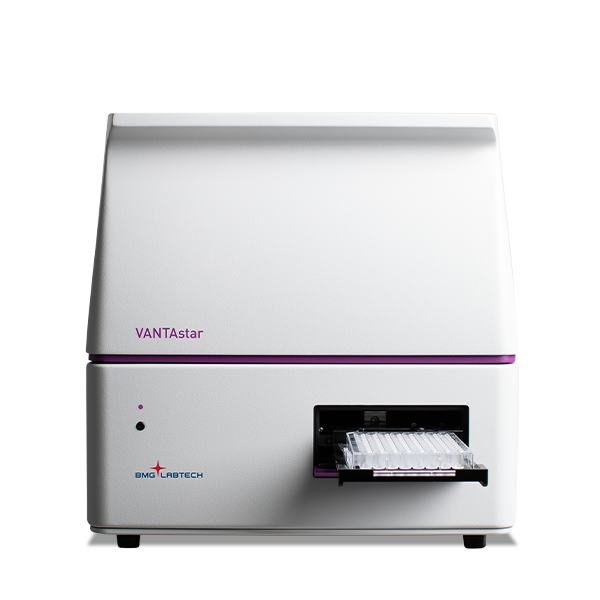
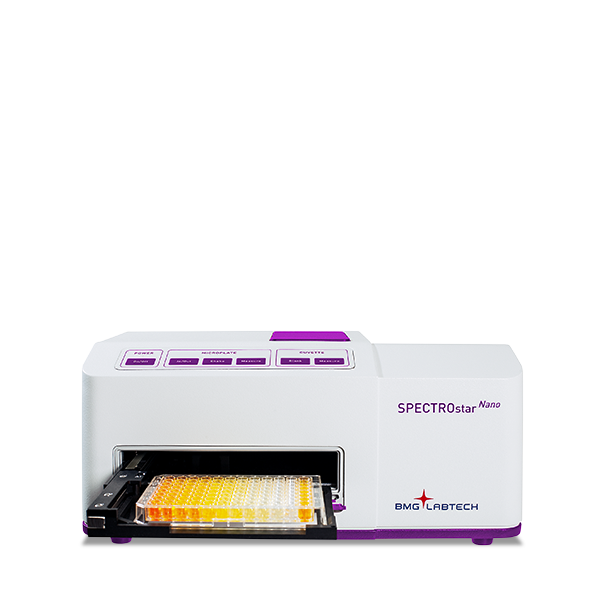
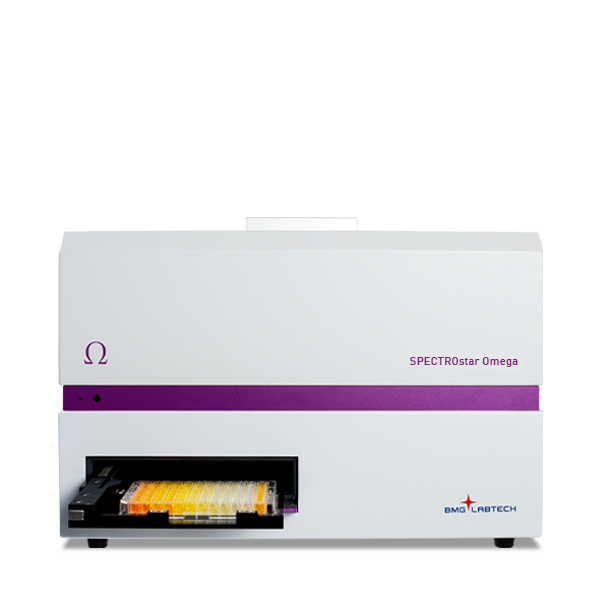
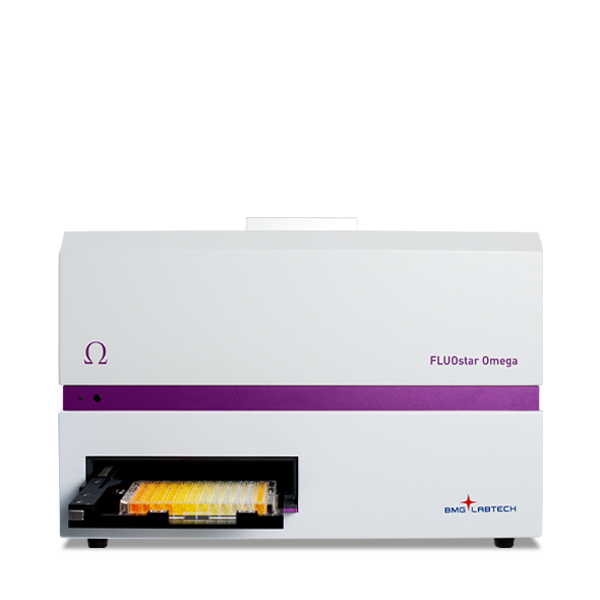
Powerful and most sensitive HTS plate reader
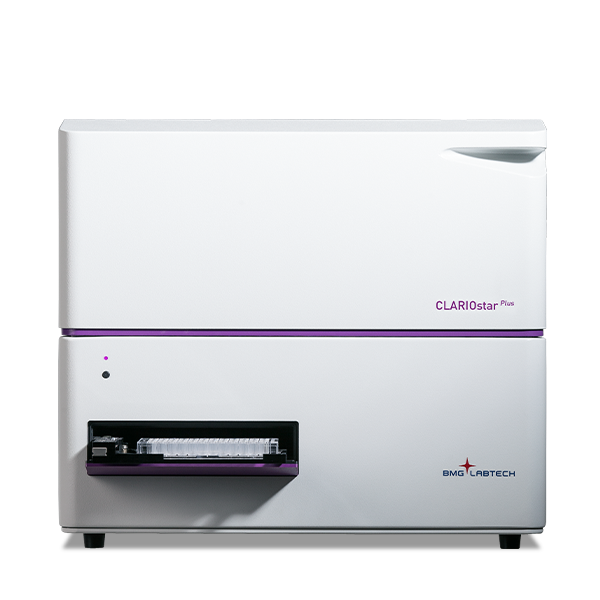
Most flexible Plate Reader for Assay Development
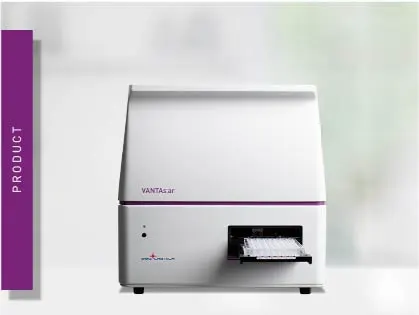
Flexible microplate reader with simplified workflows
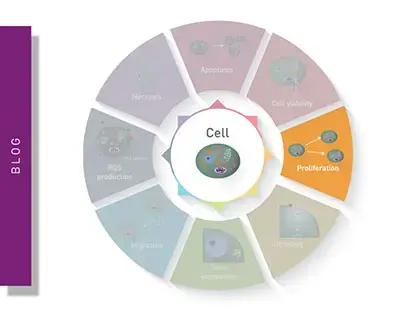
Discover the essential features of cell proliferation assays, their applications in research, and how to select the right assay for successful experiments.
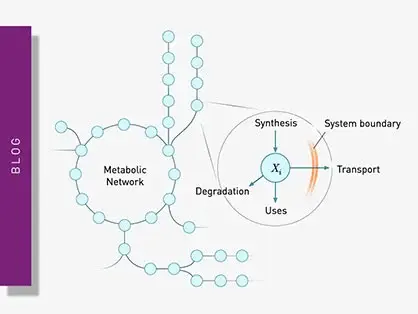
Explore metabolic flux analysis, its significance in research, and how microplate readers enhance measurements for insights.
Explore the vital role of mitochondrial metabolism in cellular function, its measurement techniques, and how microplate readers enhance research in this field.
Explore the intricacies of cancer metabolism, the Warburg effect, and how microplate readers aid in understanding these critical processes in cancer cells.
Learn about applications for bacterial metabolism on a microplate reader.
Energy makes life possible. But where does it come from? Cellular metabolism plays a crucial role in all living organisms as almost every cellular process requires energy.