






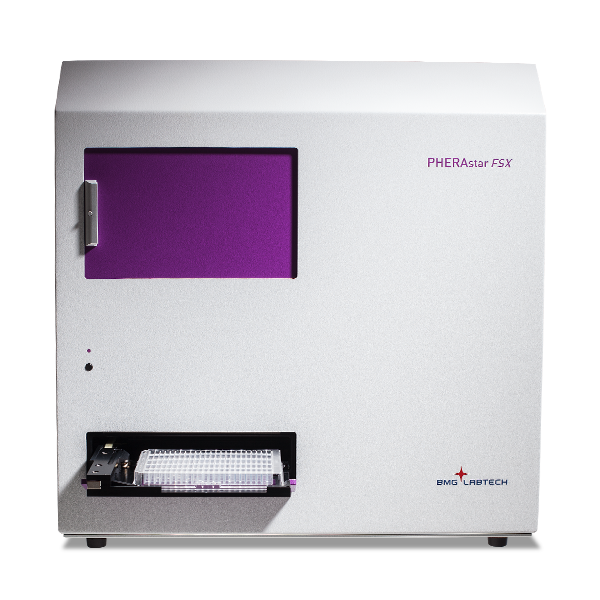
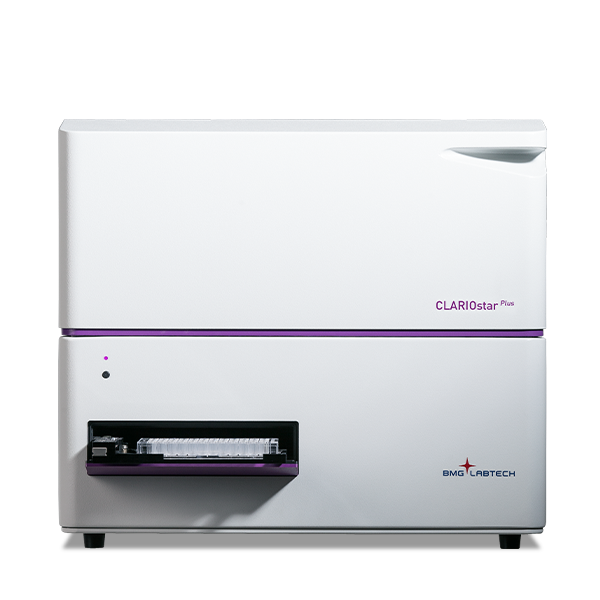
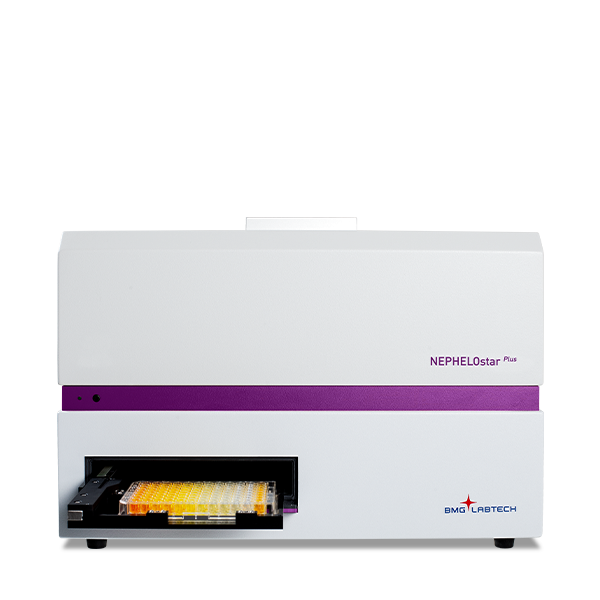
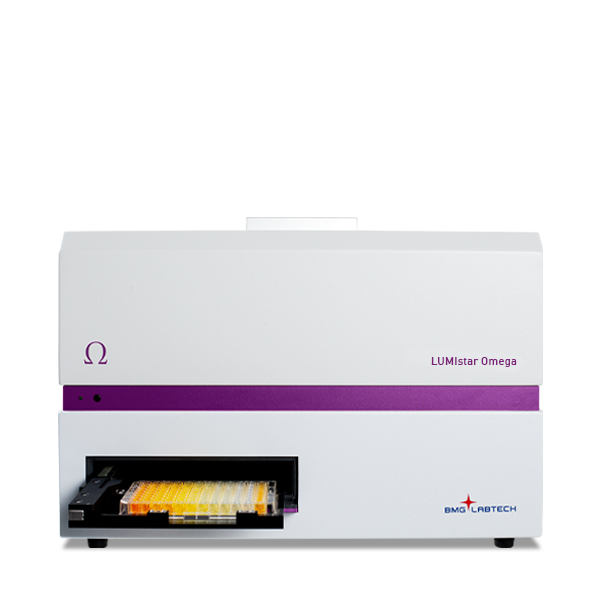
 How do I find the right microplate reader?







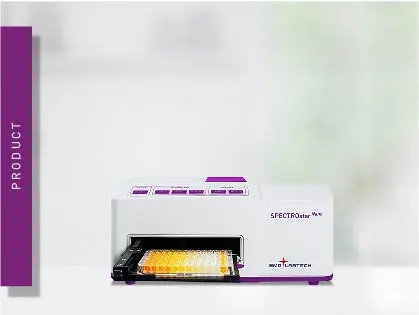
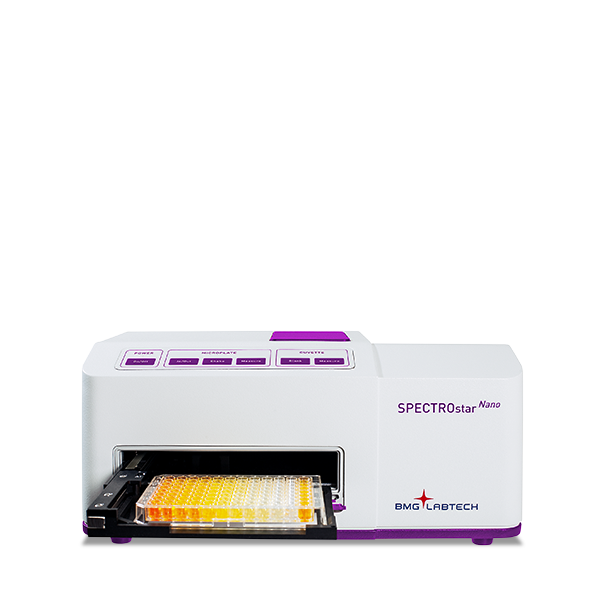
SPECTROstar Nano
Absorbance plate reader with cuvette port
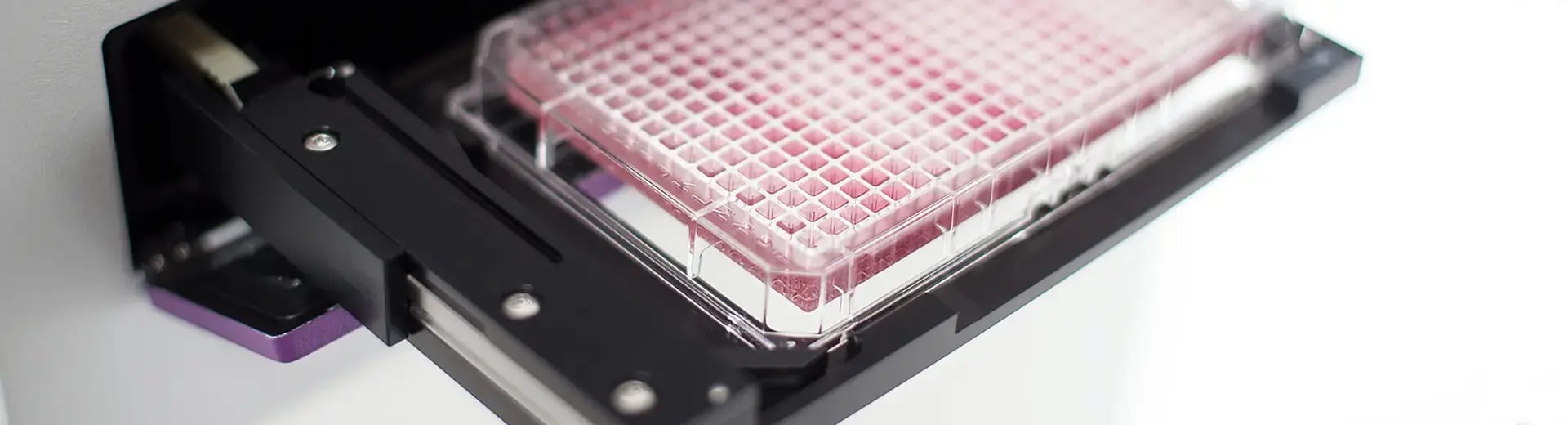
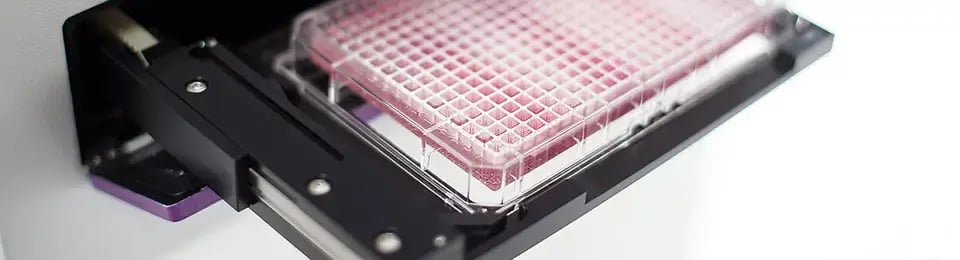

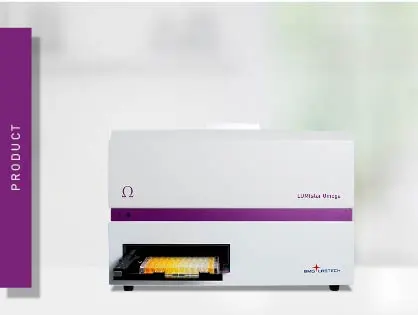
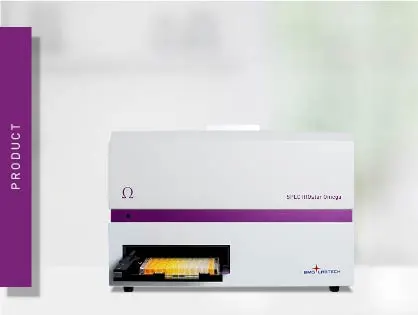
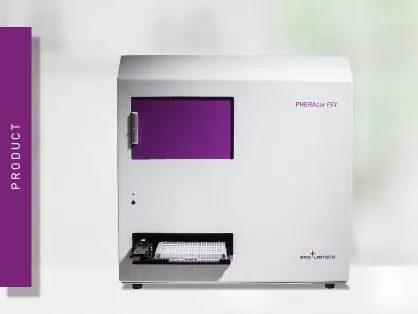
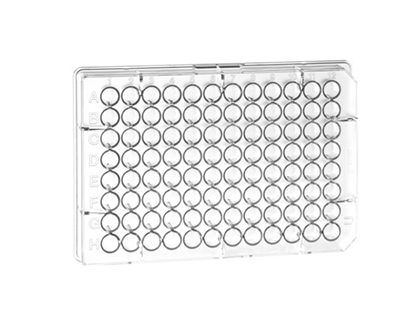
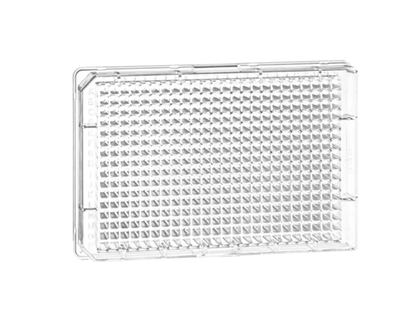
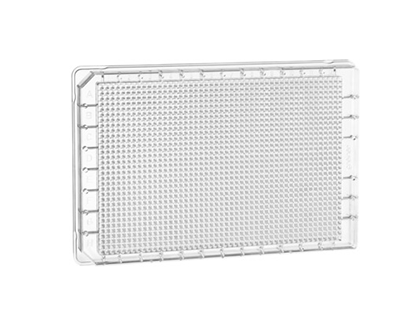
A microplate reader is a laboratory instrument that is used to measure chemical, biological or physical reactions, properties, and analytes within the well of a microplate. A microplate consists of small multiple wells in which separated reactions take place, enabling the analysis of multiple samples. In the microplate, these reactions convert the presence of an analyte or the progression of biochemical processes into optical signals. The microplate reader is an optical system that detects these signals and thus quantifies the parameter of interest.
Scientists in the life sciences and pharmaceutical industries (e.g., drug discovery) strive to improve routine laboratory processes and efficiency by using products or instruments able to save time. A microplate reader can handle up to 3456 samples in minutes or even seconds. A plate reader helps to minimise operational time and to save reagent costs, allowing researchers to focus more on data analysis and the generation of actionable insights.
Plate readers are used for the quantification of several biological and chemical assays in a microplate. Nowadays, the availability of a plethora of reagent kits enables the exploitation of multi-mode plate readers in different fields and for many different applications. Besides biological, cellular, biochemical, pharmaceutical research and drug discovery, both in academic and industrial environments, microplate readers are also used in drug discovery, environmental research, and in the food or cosmetics industry.
A microplate reader detects light signals produced within a specific wavelength range by samples that have been pipetted into a plate. The optical properties of these samples are the result of a biological, chemical, biochemical, or physical reaction. Different analytic reactions result in different optical changes used for analysis. Absorbance, fluorescence intensity, and luminescence are the most popular and most frequently used detected modes in laboratories worldwide. Additionally, advanced modes such as fluorescence polarization, time-resolved fluorescence, and AlphaScreen® are also available on multi-mode microplate readers.
Microplate-based measurements detect light signals produced by a sample, converted by a sample, or transmitted through a sample. In the plate reader, the signal is measured by a detector, usually a photomultiplier tube (PMT). PMTs convert photons into electricity that is then quantified by the microplate reader. The output of this process is numbers by which a sample is quantified and that are used for data analysis.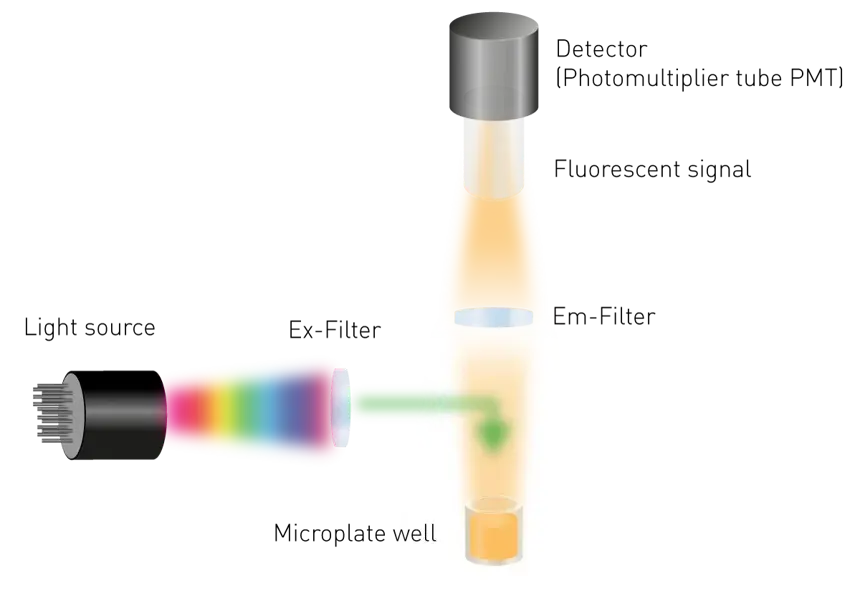 Depending on the nature of the optical signals and consequently on the measurement mode, microplate samples may need to be excited by light at specific wavelengths. This light source is usually a broadband xenon flash lamp. To allow specific excitation of the sample, the light produced by the lamp is selected by specific excitation monochromator or filter-based optics. On microplate readers, for increased sensitivity and specificity, the optical system can employ filters or monochromators on the emission side to select emission wavelengths. These are usually placed between the sample and the detector. The optical system combined with the PMT determines the wavelength range of the reader.
Would you like to use a microplate reader in your laboratory?
Request more information here:
Configure your microplate reader and get an initial recommendation!
 Which assays would I like to do?
When the need for a plate reader arises, applications that have to be measured have typically already been identified. However, it makes sense to pay more attention to this question to find the right and future-proof single or multi-mode reader for the laboratory. On the one hand, you will have to run a number of basic tests such as to quantify nucleic acids and proteins,reporter gene assays for gene expression analysis or cell viability. For all these applications, several solutions are available that are based on different principles, technologies, and sensitivities. Therefore, it is important to know in advance the exact name and supplier of the kit or the chemistry you want to use on your plate reader. On the other hand, there are thousands of tests that answer specific biological questions. There may be simpler solutions based on microplates to the problems that you usually solve with cumbersome tests. Therefore, reviewing your day-to-day lab work and gathering information on how colleagues use microplate readers is a fundamental step before you buy a plate reader. Alternatively, you can find countless suggestions on how a microplate reader can simplify your research in our "research areas".
 Which detection modes do I need for my assay?
Different assay kits are detected differently, even though they might answer the same biological question. If you already identified commercial kits, you will find the required measurement mode in the product insert. Otherwise, a microplate reader can include one of the following modes or a combination thereof for multi-mode readers:
Absorbance measures how much light is lost (absorbed) when transmitted through a sample. Molecules often absorb light at a specific wavelength and can be quantified by measuring their absorbance. Wavelength selection capability in the UV-visible range is mandatory on an absorbance reader and can be achieved with filters, monochromators or spectrometers. Typical applications that are read by an absorbance microplate reader are:
Fluorescence is the absorption of light energy and its transformation into emission light, next to kinetic energy and heat. Since the emitted light is lower in energy than the input light, emission is always of higher wavelength. The process of energy uptake, energy conversion and light emission is quick and occurs in a nanosecond timeframe. The measurement of fluorescence intensity occurs as follows in a plate reader: excitation with light at a specific wavelength and quantification of the emission light at higher one at about the same time. The wavelength selection is accomplished via filters or monochromators. The signal intensity is linear to the concentration of a fluorophore and is accordingly used to quantify fluorescent (or fluorescently labelled) molecules. Other applications employ a shift in emission or an increase of fluorescence when interacting with a molecule of interest. Typical applications detected by a fluorescence plate reader are the following:
| Cell viability assays | Resazurin assay, Calcein-AM |
| Aggregation assays | Thioflavin T (RT-QuIC) |
| Enzyme activity assays | 4-methylumbelliferone (4-MU), NADH-based assays, 7-Amino-4-Methylcoumarin (AMC) |
| Reactive oxygen species | H2DCFDA assay, DCF assay |
| Nucleic acid quantification |
Qubit assays, Quant-iT assays (e.g. PicoGreen) |
The emission of light without prior excitation is referred to as luminescence. Its production in life science experiments occurs as the result of a chemical reaction and is either spontaneous or needs enzymatic catalysis. In a spontaneous reaction, the substrate as well as co-factors need to be present to generate light. For an enzyme-dependent luminescence reaction, a functional enzyme is essential. Such an enzyme is called luciferase. A detector is necessary to detect the emitted light on a plate reader. Typically, all light coming from a well is bundled by a lens and guided to the detector. Accordingly, a luminescence plate reader does not rely on filters or on an excitation source. For dual emission approaches, the wavelength selection is accomplished via filters or monochromators. This very sensitive mode is used to study the following:
| Cell viability assays | CellTiterGlo |
| Reporter assays | Dual luciferase reporter assay |
| Receptor-ligand-binding | BRET-based assays |
Fluorescence polarization is a fluorescence-based technology that uses polarized light to excite the fluorescent molecule. The change of polarization of the emitted light is determined by measuring the emission in the parallel and perpendicular plane relative to the excitation polarization plane. Changes in polarization result from differences in molecular weight. Small and light molecules move quickly and depolarize fluorescence emission whereas bigger molecules move slowly and retain polarization. This principle allows to study the following:
| Competitive binding assays | |
| Nucleotide detection to report on enzyme activities | Transcreener assays |
AlphaScreen (Amplified Luminescent Proximity Homogeneous Assay) technology uses beads that release singlet oxygen when excited with red light (680 nm). Singlet oxygen molecules move up to 200 nm and react with thioxene in a chemiluminescent reaction. Further energy transfers lead either to broad signals between 520 and 620 nm or to discrete signals. If donor beads (singlet oxygen releasing) and acceptor beads are in close proximity, a luminescent signal is emitted and can be detected by the reader. These beads are usually brought together by antibodies that specifically bind to the same analyte, or that are coupled to molecules that interact with each other. On a plate reader, excitation at 680 nm is combined with a readout that is delayed in time, compared to the excitation. It is often used for high-throughput screening applications studying the following:
| Protein, cytokine quantification | AlphaLISA assays |
| Protein phosphorylations | Alpha SureFire assays |
| Protein-protein interactions | AlphaScreen assays |
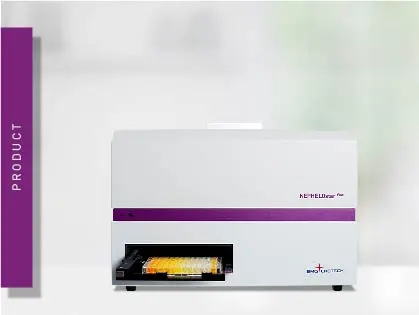
Nephelometry is a technique used to measure the amount of turbidity in a solution caused by the presence of suspended insoluble particles. When directed through a solution containing suspended solid particles, light is transmitted, absorbed, and scattered (reflected off the particles). Nephelometry directly quantifies the intensity of the light scattered by insoluble particles in the sample. A nephelometer is a reader that contains a light source, a detector arranged at a right angle to the light beam, and in between an optical light scattering collector. This principle allows to study the following:
Time-resolved fluorescence (TRF) is a method based on fluorescence that requires excitation of the sample at a specific wavelength and detection at a different one. Compared to conventional fluorescence intensity, the emission endures for a millisecond instead of a nanosecond timeframe. This is made possible by lanthanides, rare earths with long-lifetime fluorescence characteristics. Readers measure the emission signal with a delay to the excitation, avoiding the detection of background and autofluorescence. TRF is employed for these applications:
| Metabolic assays | soluble probes for extracellular acidification and oxygen consumption measurements |
| Biomolecule and protein quantification | Immunoassay, DELFIA |
Time-Resolved FRET (TR-FRET) is a detection technology that combines TRF with Förster´s Resonance Energy Transfer (FRET). It is mainly used to analyse binding events and for high-throughput drug screening. FRET describes a transfer of energy between two fluorophores. The transfer depends on the spatial proximity between donor and acceptor and on the overlap between the donor´s emission and the acceptor´s excitation spectrum. Kits include HTRF, Lanthascreen, Transcreener and THUNDER, and are employed for these applications:
| Binding studies | TR-FRET-based assays |
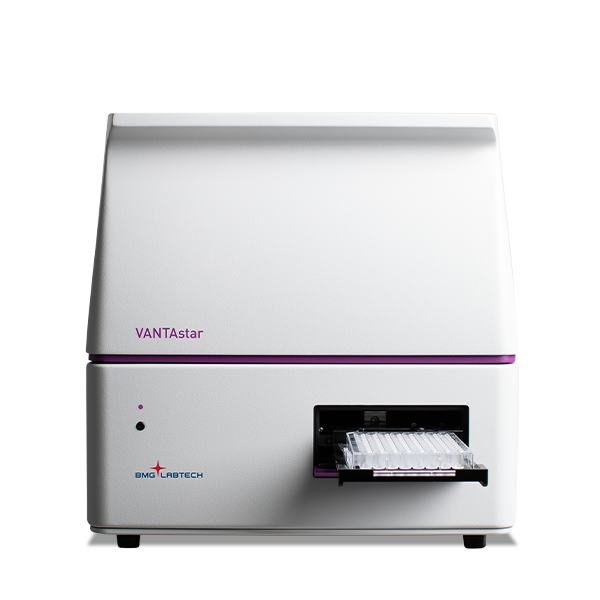
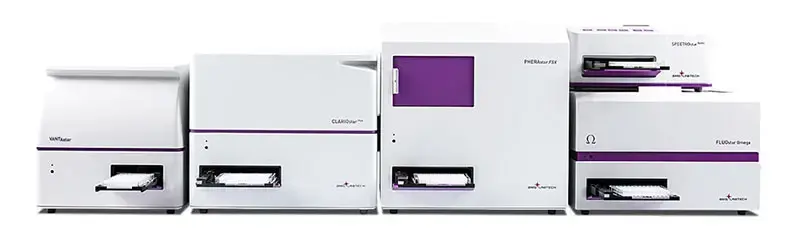
 Our single-mode plate readers
These microplate readers can measure only one detection technology (e.g., absorbance plate reader). A single-mode reader is the best choice when it is already clear that the instrument will be used for just one application (e.g., nucleic acid detection). Such tasks are typically long-term applications that block the microplate reader for other measurements. Therefore, one mode is sufficient. Examples for such studies include microbial growth monitoring which takes one or more days, or fluorescence detection of thioflavin T experiments which take up to 7 days. Single-mode readers satisfy your laboratory if you can perform all your applications in one mode. For instance, with an absorbance microplate spectrophotometer you will be able to measure enzyme activities, quantity of DNA and proteins, cell health and cell viability, microbial growth assays and many more. However, you are limited to assays that might have lower sensitivity or specificity than applications employing other detection modes. If you currently plan applications based only on one detection mode but you are not sure what the future brings, look out for microplate readers that can later be upgraded to multi-mode instruments.
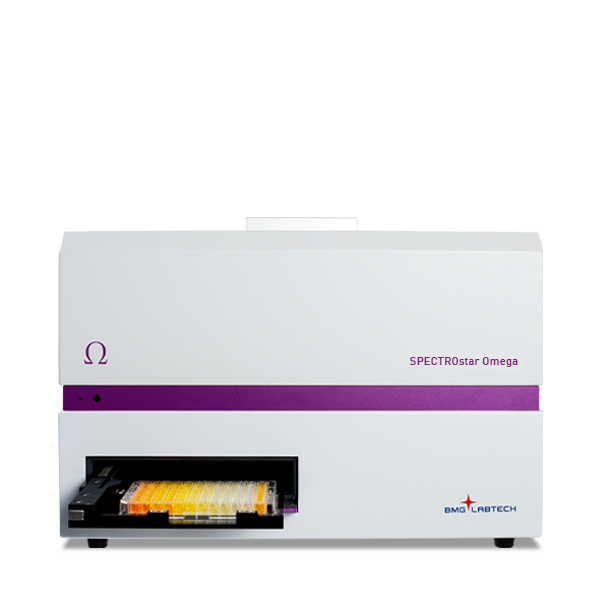
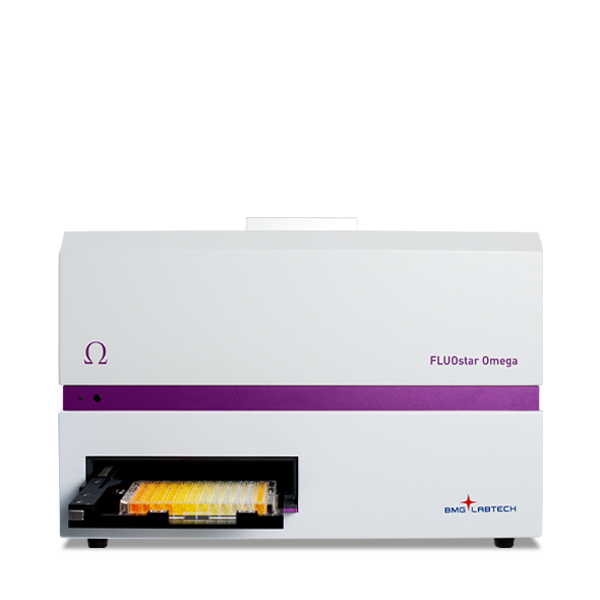
 Our multi-mode microplate readers
Instruments capable of reading two or more detection modes are called multi-mode microplate readers. Multi-mode detection offers higher flexibility and a broad range of assay kits that can be read, typically absorbance, luminescence and fluorescence-based assays. Multi-mode microplate readers are recommended whenever many users work on the same machine, when your applications change from project to project or, if you already know you need to read applications with different detection technologies. Furthermore, a multi-mode plate reader is more cost-effective than multiple dedicated single-mode readers.

When it comes to the purchase of a microplate reader, budget of course plays a role.
The price of a microplate reader depends on the technical equipment and the number of measurement technologies that the device can measure in case of a multimode microplate reader. The price range of a reader starts at 2.500 Euro/Dollars for a basic filter-based ELISA microplate reader and could go up to over 150.000 Euro/Dollars for a high-end multi-mode microplate reader with several detection modes and the best technology for highest sensitivity and fastest detection.
Be careful with your choice and do not only consider your current, but also your future plate reader needs.
Keep an eye on the possibility to upgrade your microplate reader with additional features or measurement modes. If you have the chance to upgrade later, you don’t need to buy an additional microplate reader for future applications. This saves not only money and useful space in your lab, but also time that you need to get used to a new plate reader or brand.
Besides the hardware consider as well the software. Is it included with the reader? Is it easy to use with user-programmable protocols? Do you have to pay for additional user licenses? Is a data analysis software included?
Be also aware of possible additional hidden costs that could come with your microplate reader e.g., fees for servicing, support, updates or bundled reagent packages.
Also keep in mind that although filter-based readers are usually cheaper than monochromator-based instruments, you need to purchase different filters for different applications. Be sure to factor in those costs as well.
 BMG LABTECH is specialised in the production of microplate readers only and has more than 30 years of full expertise in microplate reading technology. This knowledge translates in the experimental results that our instruments deliver - the only factor that counts in your lab! Our users can trust to receive best results in sensitivity, speed, dynamic range and flexibility. Moreover, our microplate readers are developed to provide optimum assay performance for years. Our microplate readers are developed, produced and tested in Germany and are built to be extremely robust and reliable.
One quality seal is our product ranking on the established scientific platform "Select Science", where our customers gave us 4.7 out of 5.0 stars. Don't miss to read what our users have to say about our microplate readers.
Due to their modularity, all our microplate readers can be equipped with different modes and cover a multitude of applications. Additional features can be upgraded. This gives you the chance to keep your options open, even if you don’t use the full scope of your microplate reader right at the bat.
At BMG LABTECH we strive to provide you with the very best customer service. If you need customer support, we are only a phone call or email away. During business hours, you immediately speak live to a person who is happy to assist. There is no automated phone system or waiting in a queue, our scientists, engineers, and technicians are always there to help.
All our instruments come with a multi-user software package that includes a microplate reader control and a data analysis software. It can be installed on as many computers as users require, without the need to purchase licenses, and is conceived to meet the FDA 21 CFR Part 11 guidelines for data integrity. Software updates for our microplate readers are of no charge within the first 12 month after purchase.