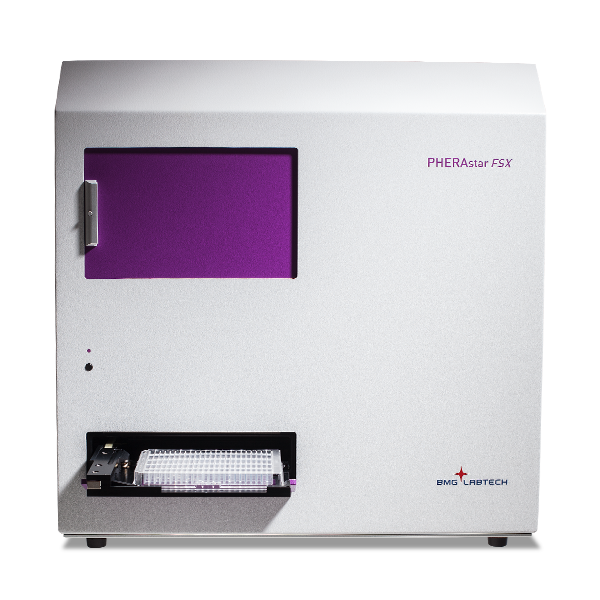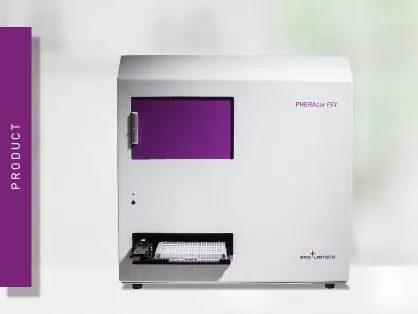
PHERAstar FSX
Powerful and most sensitive HTS plate reader





Tobias Pusterla’s scientific background spans veterinary biotechnology, cancer cell biology, and the molecular mechanisms underlying inflammation‑driven tumorigenesis. After graduating in Veterinary Biotechnology at the University of Milan, Italy, he worked in mouse mutagenesis before completing a Ph.D. in Cellular and Molecular Biology through a joint program between the Open University of London, UK and the San Raffaele Scientific Institute, Milan, Italy. He later conducted postdoctoral research at the German Cancer Research Center (DKFZ) in Heidelberg, Germany, focusing on tumor biology, the tumor microenvironment, and the role of chronic inflammation in cancer development. His scientific work has contributed to understanding how damage‑associated molecular signals drive immune activation, cell migration, inflammation, and tumorigenesis, helping to clarify fundamental pathways linking cellular stress responses to physiological and pathological outcomes. After more than 13 years of research experience, he joined BMG LABTECH in 2013. Here, he oversees global marketing activities, including the creation of scientific content and the coordination of application support.

The universal Transcreener® assays from BellBrook Labs measure byproducts of common biological enzymatic reactions. Four competitive immunoassays for the direct detection of ADP, AMP/GMP, UDP, and GDP are available. Quantification of these nucleotides allows the calculation of enzymatic activity of e.g. kinases or methyltransferases.
Transcreener assays rely on direct, highly-specific detection of nucleotides using antibodies that are able to differentiate between nucleotides on the basis of a single phosphate group. These assays can be used across entire families of nucleotide-dependent enzymes. The Transcreener assays use a homogenous, competitive immunoassay format in which the antibodies are paired with high-affinity fluorescent tracers. Displacement of the tracer by the nucleotide being detected causes a change in its fluorescence properties.
The Transcreener ADP2 kinase assay use far-red dyes and can be measured using three different fluorescent readouts:
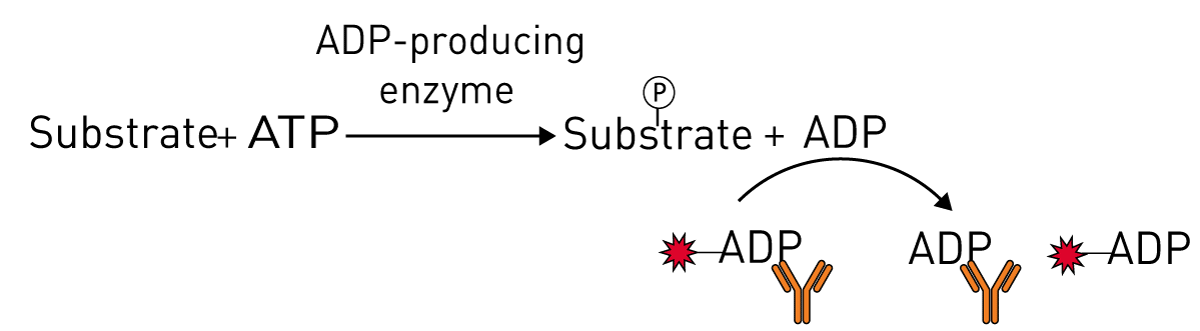
The Transcreener® ADP2 FP assay from BellBrook Labs is an extremely sensitive ADP assay with a more sensitive antibody against ADP, yielding an excellent signal at less than or equal to 10% ATP consumption for a broad range of initial ATP concentrations (0.1-1,000 μM). The result is the ability to screen low ATP Km enzymes and to use initial velocity enzyme kinetics at or below ATP Km concentrations, which leads to accurate inhibitor potencies and the ability to use less enzyme and substrate. Ratiometric, red-shifted fluorescence polarization output minimizes signal variability and reduces compound interference.
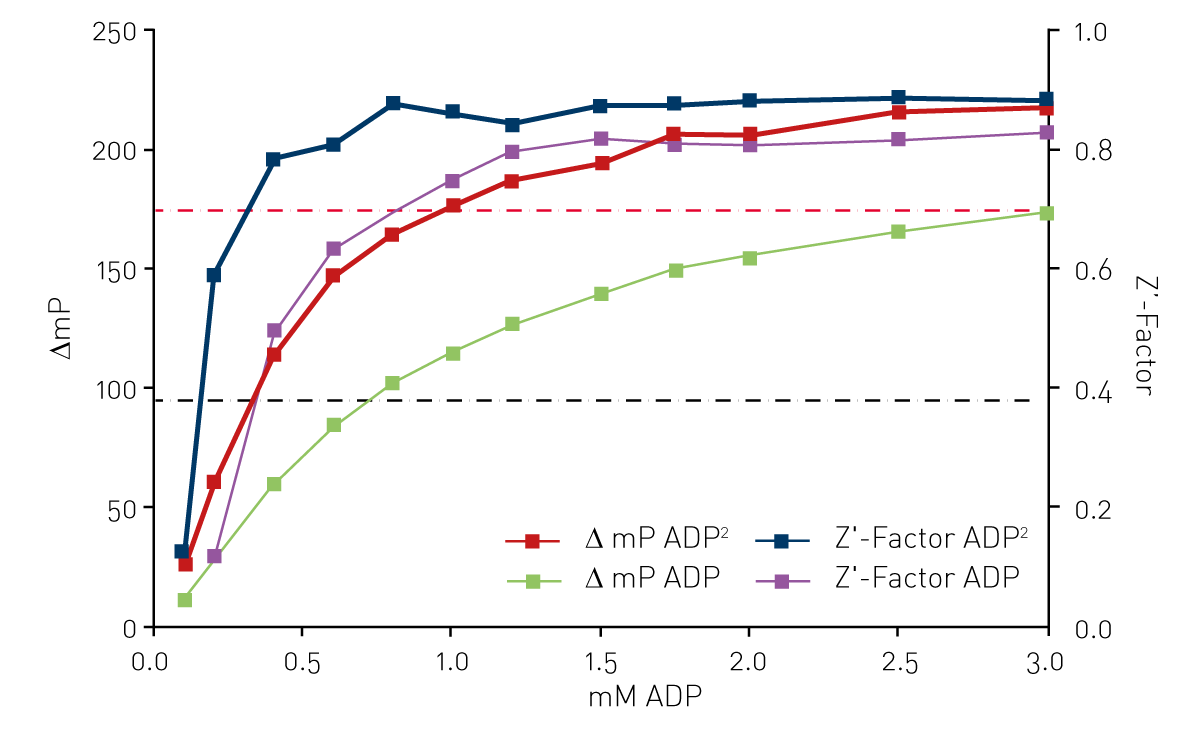
In step two the Transcreener ADP2 Detection Mixture, which contains an ADP Alexa633 tracer bound to an anti-ADP antibody, is added. If there is enzymatic activity resulting in necessary ADP then the bound tracer is displaced by the ADP. The free tracer rotates quickly leading to a lower polarization value. If there is no free ADP because of no enzymatic activity, the tracer is still bound to the antibody. This whole construct rotates very slowly giving a higher polarization number. Therefore, ADP production leads to a decrease in fluorescence polarization.
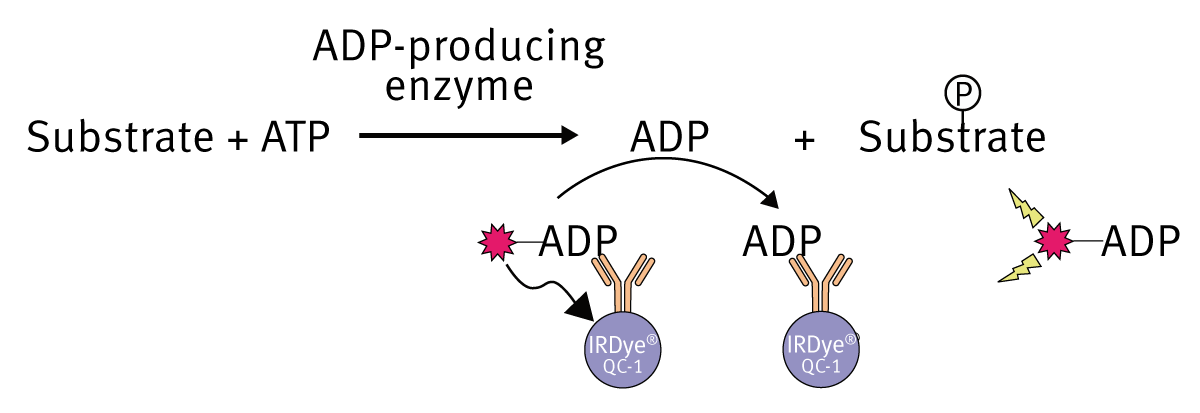
The Transcreener® ADP2 Fluorescent Intensity (FI) assay from BellBrook Labs extends the Transcreener platform for ADP detection by utilizing a simple fluorescent intensity output which can be used on both fluorescence readers typically found in academic and therapeutic research labs (such as the CLARIOstar® and Omega series) as well as more complex plate readers more commonly used in core facilities and HTS labs (such as the PHERAstar® FSX)
 The Transcreener® ADP2 FI Assay is a red, competitive fluorescence intensity assay based on the detection of ADP and therefore is compatible with any enzyme class that produces ADP, including protein, lipid, and carbohydrate kinases, ATPases, DNA helicases, carboxylases, and glutamine synthetase. It is a simple one-step homogenous detection assay and is flexible with regard to ATP concentration (0.1 to 1,000 µM ATP). The assay provides an excellent signal at low substrate conversion, with a Z' ≥ 0.7 at 2.5% ATP conversion using 1 µM ATP.
 The Transcreener TR-FRET assays are a single-step, competitive immunoassay for direct detection of nucleotides with a far-red time-resolved Förster-resonance-energy-transfer (TR-FRET) readout. The reagents for all of the assays are a far-red tracer bound to a highly-specific monoclonal antibody-terbium conjugate. Excitation of the complex in the UV range (approx. 330 nm) results in energy transfer to the tracer and emission at a higher wavelength (665 nm) after a time delay. Nucleotide diphosphate or monophosphate produced by the target enzyme displaces the tracer from the antibody, leading to a decrease in TR-FRET. The use of a red tracer minimizes interference from fluorescent compounds and light scattering. The Transcreener TR-FRET assays are designed specifically for HTS with a single addition, mix-and-read format.
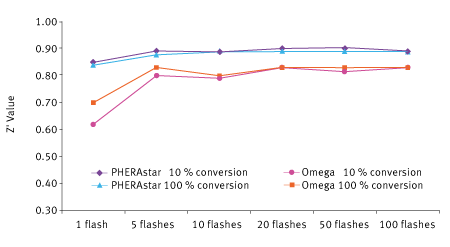
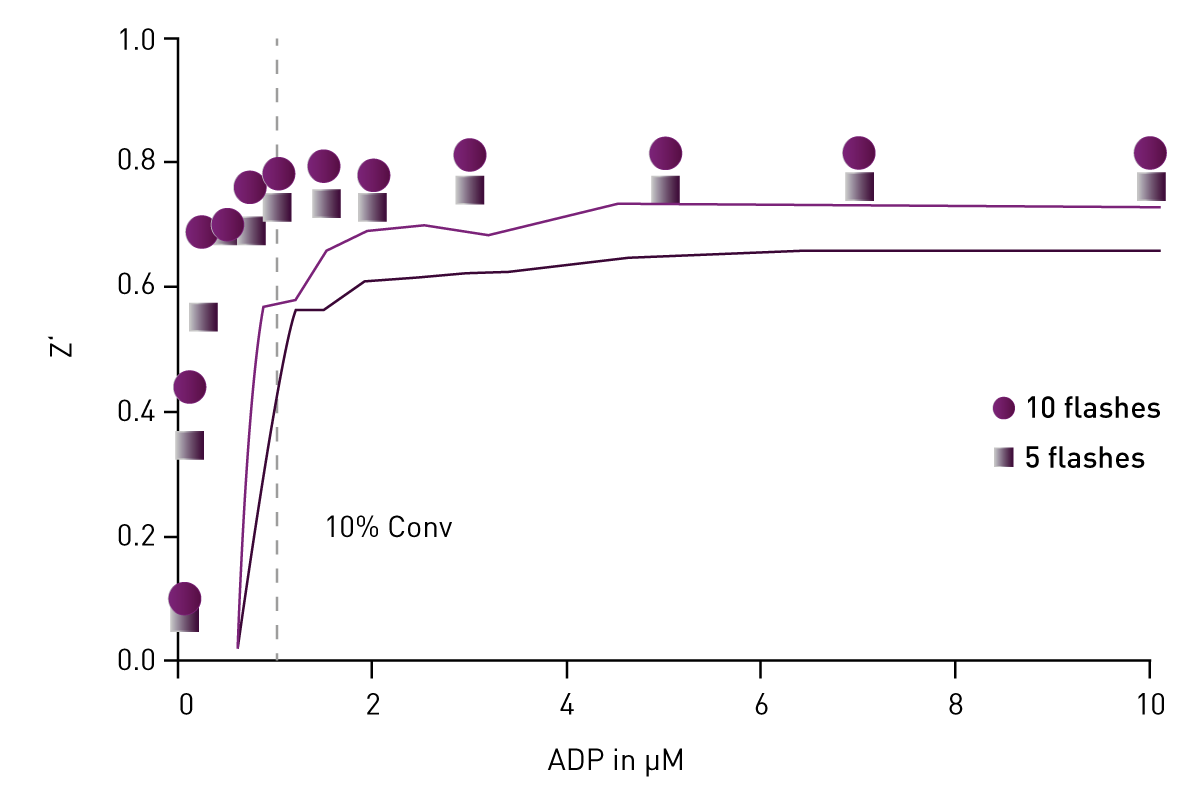 A critical factor is the correct setup of the microplate reader used for data readout. Proper selection of filters, dichroics, gain, and flashes can impact the instrument`s sensitivity for any given assay. In order to validate an instrument for use with the Transcreener TR-FRET Assays, a Z' > 0.7 at 10% conversion of 10 μM ATP is required.
Strict Transcreener validation criteria make sure that the detecting instrumentation fulfills all requirements in terms of performance (Assay Window and Z´value) and read times (a 384w microplate must be read < 5 min).
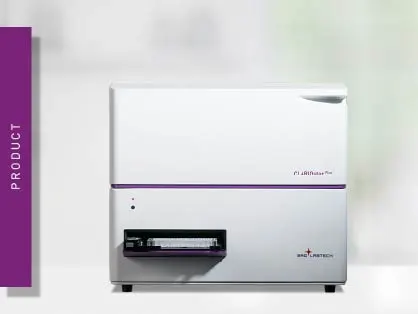
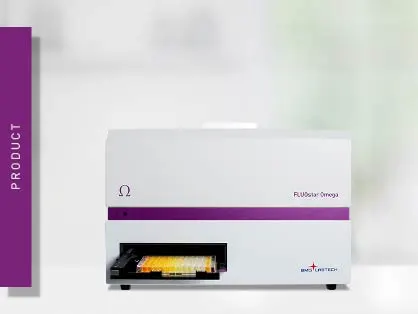
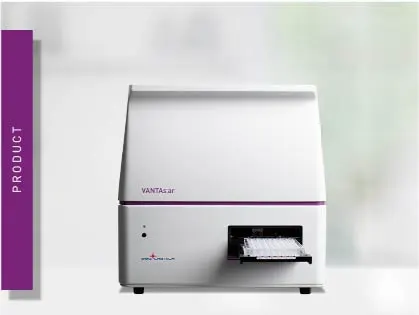
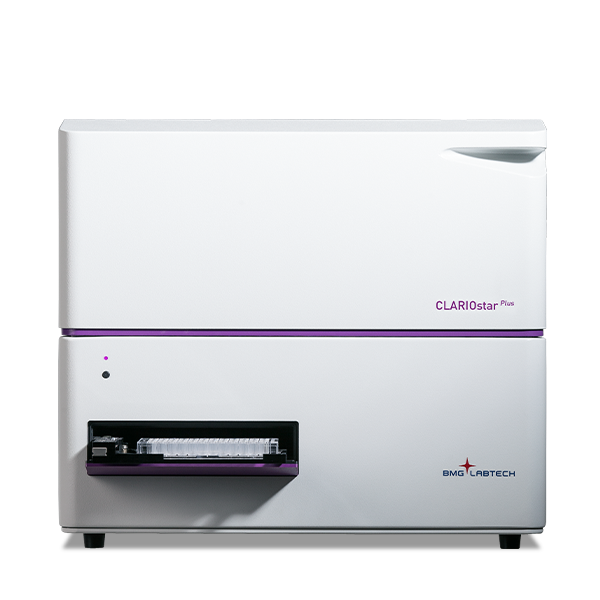
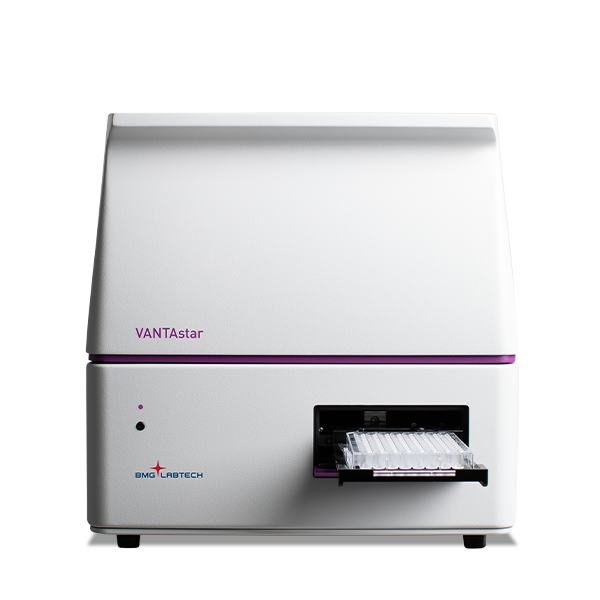
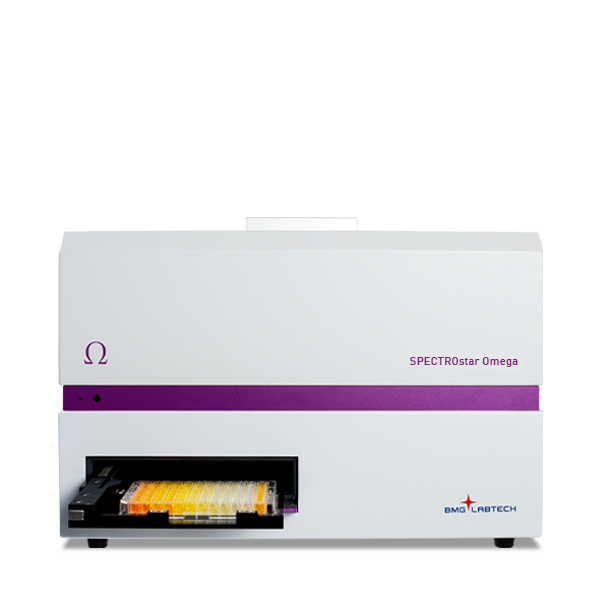
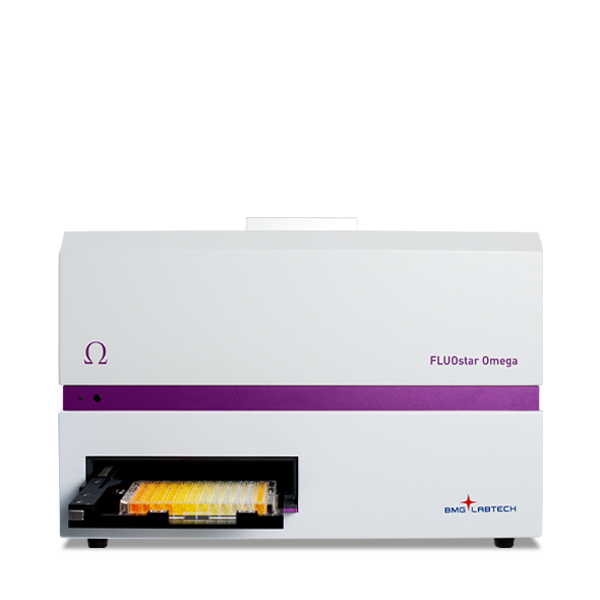
The BMG LABTECH microplate readers PHERAstar®FSX, CLARIOstar Plus, VANTAstar all achieved the Transcreener certification. The FLUOstar Omega is certified for the Transcreener ADP2 FI assay.
Meera Kumar from Bellbrook Labs says: "A Z` of 0.84 was obtained at 10% conversion when running a 10 μM ATP/ADP standard curve in FI format while the TR-FRET and FP format gave a Z` of 0.89 at 10% conversion when running a 10 μM ATP/ADP standard curve. We are proud to add the PHERAstar FSX to our growing list of Transcreener certified instruments."
Powerful and most sensitive HTS plate reader
Most flexible Plate Reader for Assay Development
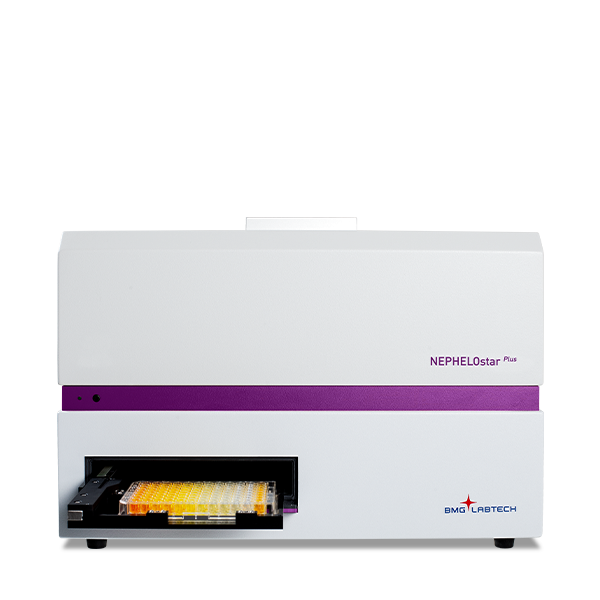
Upgradeable single and multi-mode microplate reader series
Flexible microplate reader with simplified workflows
Binding constants quantify the strength of a binding reaction between a biomolecule and its target (ligand). But how do you measure them and what can you do with them?
Receptor-ligand kinetics is the study of the rates at which receptors and ligands interact, bind and dissociate. Learn why these types of measurements are important and how to measure them.
Receptor-ligand interactions are crucial for cell signalling. They are also important for drug discovery. How do microplate readers deliver benefits to both?
Degrons are specific sequences of amino acids or structural motifs within a protein that are important for targeted protein degradation. Find out how microplate readers can advance research into natural and engineered degrons.
Gene reporter assays are sensitive and specific tools to study the regulation of gene expression. Learn about the different options available, their uses, and the benefits of running these types of assays on microplate readers.
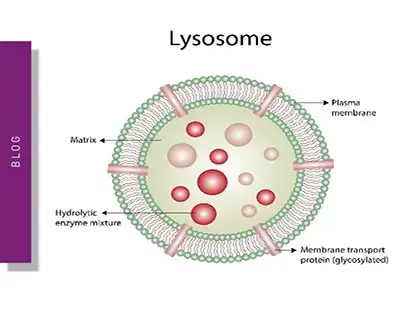
Innovation for targeted protein degradation and next-generation degraders is gathering pace. This blog introduces some of the different approaches that act via the lysosome or proteasome.