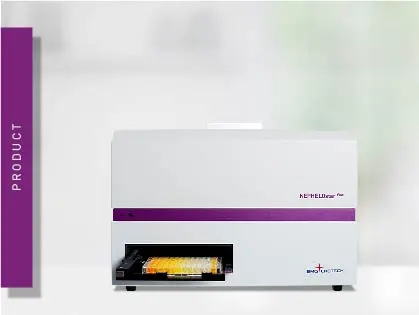
NEPHELOstar Plus
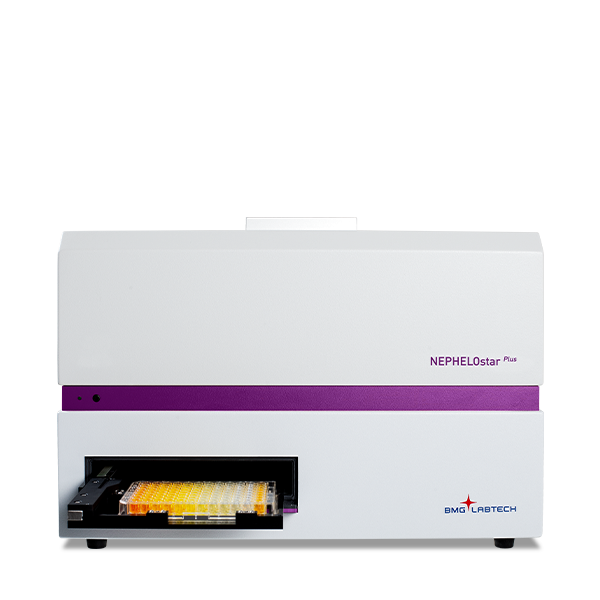
Microplate nephelometer for light-scattering and turbidity measurements





Tobias Pusterla’s scientific background spans veterinary biotechnology, cancer cell biology, and the molecular mechanisms underlying inflammation‑driven tumorigenesis. After graduating in Veterinary Biotechnology at the University of Milan, Italy, he worked in mouse mutagenesis before completing a Ph.D. in Cellular and Molecular Biology through a joint program between the Open University of London, UK and the San Raffaele Scientific Institute, Milan, Italy. He later conducted postdoctoral research at the German Cancer Research Center (DKFZ) in Heidelberg, Germany, focusing on tumor biology, the tumor microenvironment, and the role of chronic inflammation in cancer development. His scientific work has contributed to understanding how damage‑associated molecular signals drive immune activation, cell migration, inflammation, and tumorigenesis, helping to clarify fundamental pathways linking cellular stress responses to physiological and pathological outcomes. After more than 13 years of research experience, he joined BMG LABTECH in 2013. Here, he oversees global marketing activities, including the creation of scientific content and the coordination of application support.

All these assays have an insoluble component (particles) in a liquid environment and can be hence measured by turbidity. Turbidity is defined as the cloudiness or haziness of a fluid, originated by suspended insoluble particles. While some suspended particles are heavy enough to settle rapidly into the liquid, small particles settle only very slowly. These very small insoluble particles cause the liquid to appear turbid.
The measurement of turbidity is a key test of water quality in particular for drinking water. Nevertheless, turbidity has also plenty of applications in life sciences, biochemistry and medical and pharmaceutical chemistry.
Turbidity can be measured in two ways. The first applies mainly to bacterial growth assays, which are classically measured through the detection of light scatter in absorbance at 600 nm (OD600). In this case, an absorbance microplate reader that measures the light transmission through the sample acts as a turbidimeter. The measurement of the absorbance or optical density (OD) generated by the bacteria scattering the light is actually a measurement of turbidity.
Generally, for bacterial growth detection, turbidity measurements with OD600 are preferred to UV spectroscopy since detection at 600 nm of wavelength does not harm the cells as UV light would do on one hand. On the other, irradiation with UV light may also cause DNA mutations.
The more turbid the sample, the less amount of light will pass through it. This relationship is directly proportional and can be used to calculate the degree of turbidity of a sample up to a certain extent. In fact, in most absorbance readers, turbidity measurements usually start deviating from a direct linear relationship to light transmission at > 3 OD values, as almost no light (very few photons) can be transmitted through the sample.

Alternatively, turbidity can also be detected with a dedicated instrument that specifically measures light-scattering, the nephelometer.
Nephelometric detection is based on a diode laser that directs a light beam through the sample. If there are no insoluble particles in solution, the light beam will simply pass through. The detector, set to the side of the path of the laser light beam (usually at a 90° angle), will measure no turbidity. In case a solid, insoluble matter is present in solution, the laser beam will be scattered in different directions by the particles and an optic system will collect and direct the scattered light to the detector. The higher the amount of particles scattering the light beam, the more light reaches the detector, the more Nephelometric Turbidity Units (NTU) will be measured. In fact, in nephelometry, particle density is a function of the scattered light directed to the detector.
To some extent, the light-scattering capabilities of a given density of particles depend on properties like particle colour, shape, and reflectivity. As for absorbance detection at 600 nm, also in nephelometry the amount of scattered light is directly proportional to the amount of insoluble particles in solution. However, nephelometer-based light-scattering measurements are not affected by the aforementioned limitations, providing a wider dynamic range for turbidity measurements.
As mentioned at the beginning, nephelometric detection is used mainly in pharmaceutical labs to test the solubility of drugs and in biochemical labs for protein-protein interaction, protein aggregation and polymerization studies. In immunology, turbidity detection has its main application in the development of new antibodies and of their binding capability to antigens.
There is a wide variety of research-grade nephelometers on the market. However, BMG LABTECH offers with the NEPHELOstar Plus the only instrument able to detect turbidity in microplates.
Microplate nephelometer for light-scattering and turbidity measurements