Alcohol quality testing

Distillates have their own absorption properties. Read here how they help to determine additives and authenticity.

Dr Tobias Pusterla Dr Tobias Pusterla
International Marketing Manager, BMG LABTECH HQs
Dr Tobias Pusterla

Dr Tobias Pusterla

BMG LABTECH HQs

International Marketing Manager

linkedin-icon

About Dr Tobias Pusterla

Tobias Pusterla’s scientific background spans veterinary biotechnology, cancer cell biology, and the molecular mechanisms underlying inflammation‑driven tumorigenesis. After graduating in Veterinary Biotechnology at the University of Milan, Italy, he worked in mouse mutagenesis before completing a Ph.D. in Cellular and Molecular Biology through a joint program between the Open University of London, UK and the San Raffaele Scientific Institute, Milan, Italy. He later conducted postdoctoral research at the German Cancer Research Center (DKFZ) in Heidelberg, Germany, focusing on tumor biology, the tumor microenvironment, and the role of chronic inflammation in cancer development. His scientific work has contributed to understanding how damage‑associated molecular signals drive immune activation, cell migration, inflammation, and tumorigenesis, helping to clarify fundamental pathways linking cellular stress responses to physiological and pathological outcomes. After more than 13 years of research experience, he joined BMG LABTECH in 2013. Here, he oversees global marketing activities, including the creation of scientific content and the coordination of application support.

Areas of Expertise

  • Molecular biology
  • Cell biology
  • Cancer biology
  • Cell singaling
  • Tumor microenvronment

Academic Degrees

degree-icon
PhD in Cell and Molecular Biology Università Vita-Salute San Raffaele Milano and Open University
degree-icon
BSc Degree in Veterinary Biotechnlogy University of Milan


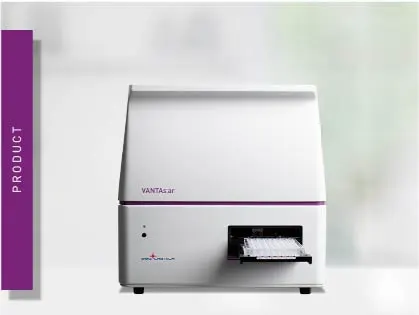
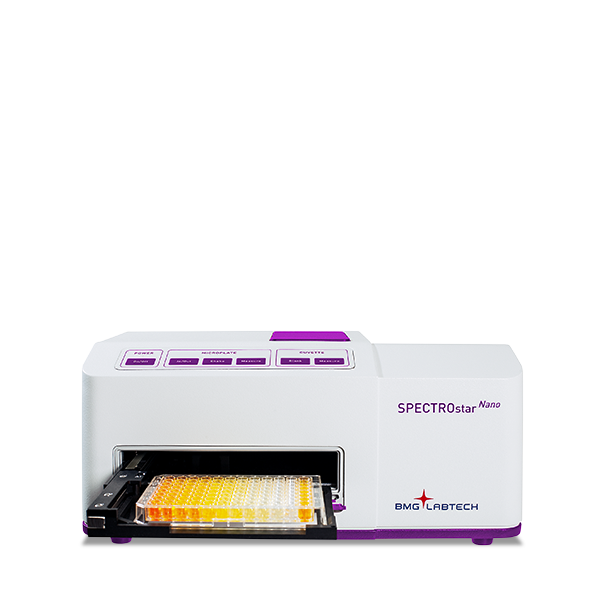
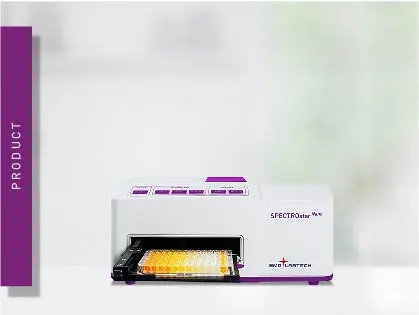
The SPECTROstar® Nano absorbance reader accelerates and simplifies the quality control of alcoholic beverages

The analysis and quality testing of alcoholic beverages has advanced over the past couple of years - thanks to the SPECTROstar Nano and Brewing and Distilling Analytical Services, LLC.

As the industry struggles to combat counterfeiters, Gary Spedding, Ph.D. - the owner of Brewing and Distilling Analytical Services - has developed a trusted test to ensure that distilled spirits are original. A UV/Vis absorbance spectra of the spirit show a unique "fingerprint" spectral curve - which is impossible to replicate in counterfeit or diluted spirits.

The SPECTROstar Nano can measure in both cuvette and microplate form, providing you with speed, flexibility, and consistency in your measurements.

The boxes below lead on to alcoholic quality testing-related content.

Frequently asked questions

  •  What is the primary purpose of alcohol quality testing using microplate readers?

    The primary purpose of alcohol quality testing with plate readers is to accurately assess the concentration and purity of alcohol samples via colorimetric/fluorometric enzymatic assays, ensuring they meet safety and quality standards.
  • Why are microplate readers important for alcohol quality testing?

    Microplate readers are useful to help ensure quality standards for alcohol testing and provide an effective way to measure the concentration of alcohol and to detect contaminants.
  • What assays are typically used to measure ethanol with microplate readers?

    Enzymatic assays using alcohol dehydrogenase (ADH) or alcohol oxidase, often coupled to a colorimetric or fluorometric readout via NAD+/NADH cycling.
  • How do plate readers facilitate alcohol quality analysis?

    Plate readers enable many, precise measurements of absorbance or fluorescence in multiple samples simultaneously, providing reliable data for assessing alcohol composition and quality.
  • Can plate readers detect contaminants or impurities in alcohol samples?

    Yes, advanced plate reader assays can identify contaminants or impurities by detecting abnormal absorbance or fluorescence signals indicative of unwanted substances.
  • What types of assays are commonly used in conjunction with plate readers for alcohol testing?

    Common assays include enzymatic tests, colorimetric assays, and fluorescence-based methods designed to quantify ethanol concentration and detect impurities.
  • How does automation improve the reliability of alcohol quality testing?

    Automation reduces human error, increases throughput, and ensures consistent application of protocols, leading to more reliable and reproducible results.
  • What sensitivity and dynamic range can I expect?

    Typical colorimetric/fluorometric ethanol assays on plate readers cover mid to high mg/mL ethanol with linear ranges defined by the kit; refer to the specific assay kit for exact values.
  • What data analysis features are useful?

    Generated standard curves (linear or 4-parameter fit), automatic concentration calculation, plate maps, replicate averaging, and exportable results.
  • How can I ensure assay accuracy and precision?

    Use fresh reagents, proper calibration with ethanol standards, include blanks and positive controls, and run samples in replicates.
  • What about interfering substances?

    Turbidity, pigments, or heavy denaturants can affect absorbance/fluorescence; consider blank corrections and assay-specific interference controls.
  • Are there regulatory or quality compliance benefits?

    Yes: high-throughput, controlled workflows support traceability, repeatability, and documentation aligned with best practices when properly validated.


Configure your microplate reader and get an initial recommendation!

Newsletter Sign-up