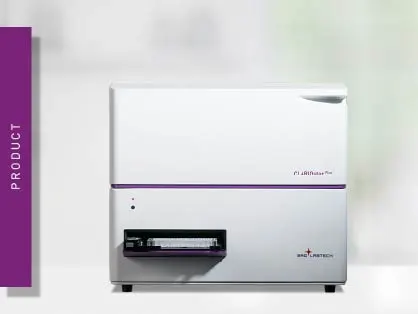
PHERAstar FSX
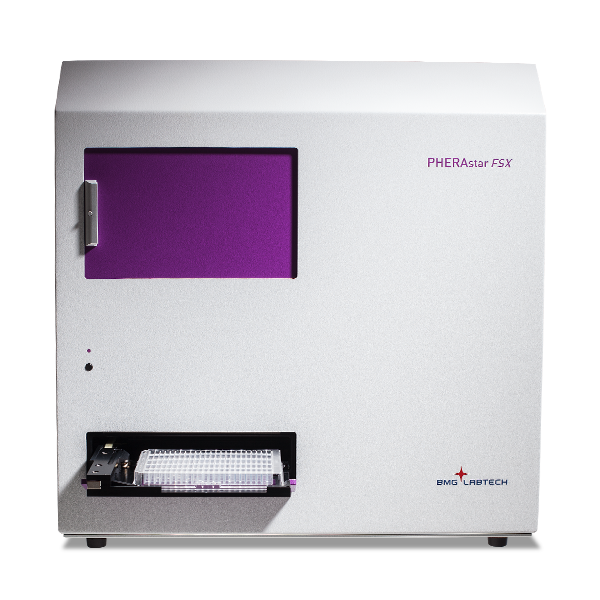
Powerful and most sensitive HTS plate reader





Dr. Martin Mangold works as an Applications Specialist at BMG LABTECH headquarters in Ortenberg, Germany. He studied biology with a focus on biochemistry and cell biology at the University of Bonn before specializing in pharmaceutical sciences and drug interactions in his doctoral studies. During his time in the pharmaceutical department, Dr. Mangold gained expertise in protein sciences, binding and interaction studies, and enzyme kinetics as part of an interdisciplinary team of chemists, pharmacists and biologists. Since 2021, Dr. Mangold has been part of the BMG LABTECH team where he authors application notes, performs training courses and supports scientific customers.

Thermo Fisher´s GeneBLAzer® beta-lactamase reporter technology provides you with a reliable, integrated set of tools for accelerating cell-based target validation, pathway analysis, and compound screening in drug discovery. This proven technology combines molecular and cell biology and a Fluorescence Resonance Energy Transfer (FRET)-based, ratiometric detection method that reduces experimental noise which can lead to false hits. The GeneBLAzer® Technology consists of readily accessible tools and custom assays for studying numerous target classes and cellular processes, including: surface and intracellular reporters (such as nuclear and cytokine receptors, orphan and known G-protein coupled receptors), a wide range of signal transduction pathways, ion channels, other transporters, and transcriptional regulators (including kinases and intracellular processes).
GeneBLAzer® Technology uses a mammalian-optimized bla gene combined with a FRET-enabled substrate to provide reliable and sensitive detection in cells. Cells are loaded with an engineered fluorescent substrate containing two fluoroprobes, coumarin and fluorescein. In the absence of bla expression, the substrate molecule remains intact. In this state, excitation of the coumarin results in fluorescence resonance energy transfer to the fluorescein moiety and emission of green light. However, in the presence of bla expression, the substrate is cleaved, separating the fluorophores, and disrupting energy transfer. Excitation of the coumarin in the presence of enzyme bla activity results in a blue fluorescence signal. The resulting blue: green ratio provides a normalized reporter response.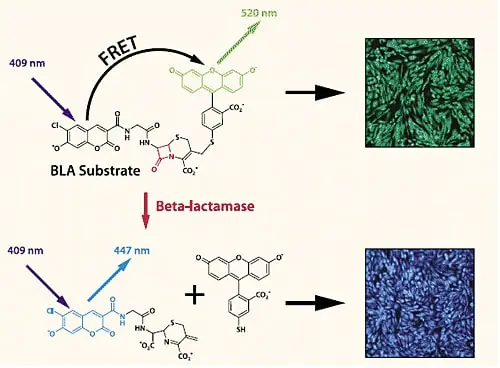
For more information about GeneBLAzer® Technology and related cellular assays for different drug target classes available from Life Technologies, please see their website:
Powerful and most sensitive HTS plate reader
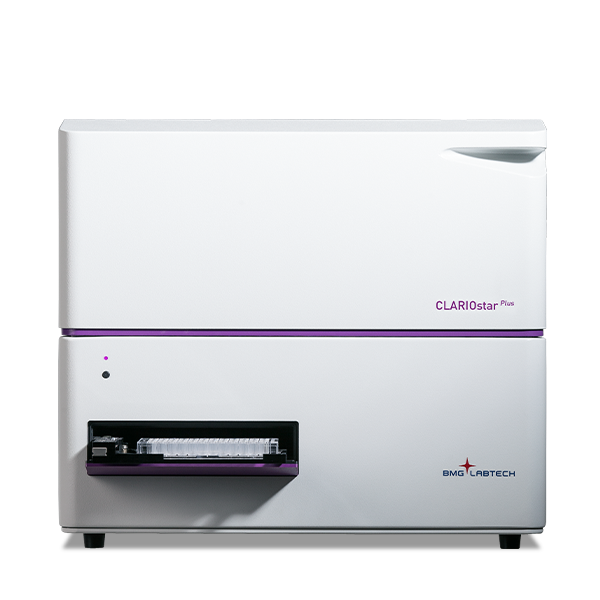
Most flexible Plate Reader for Assay Development
Upgradeable single and multi-mode microplate reader series
Flexible microplate reader with simplified workflows
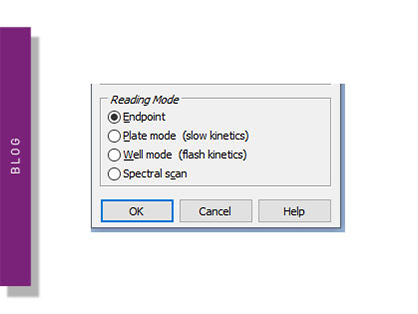
Endpoint and kinetic mode assays are used by scientists to study many processes in the life sciences. Learn about endpoint and kinetic modes on a microplate reader.
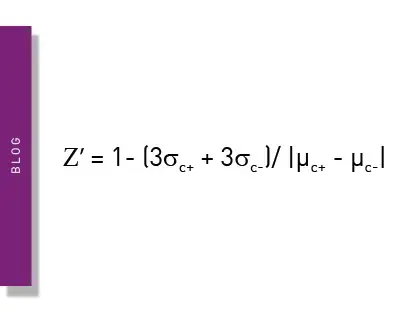
The Z prime value (Z’) is a statistical parameter that can provide practicable information on the quality of an assay. This blog looks at its usage and describes some examples of specific applications.
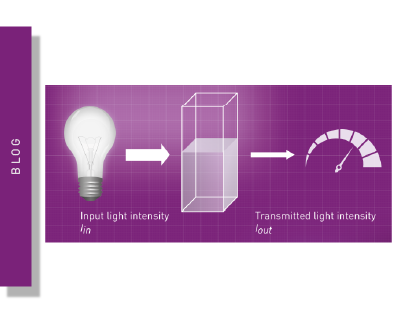
Optical density and absorbance measurements are widely used in the life sciences. This blog looks at practical applications and some of the fundamentals.
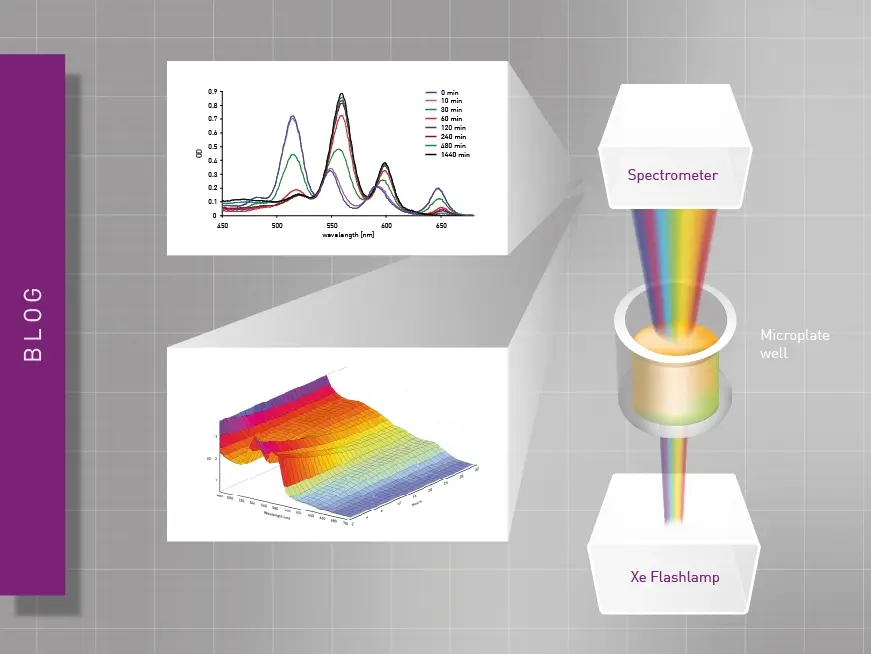
Researchers have different technology options available for absorbance measurements. This blog compares spectrometers and monochromators. What’s the difference?
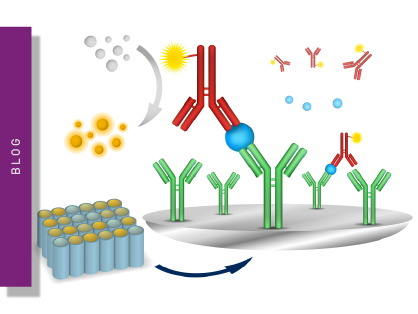
ELISAs are a popular tool to detect or measure biological molecules in the life sciences. Find out how microplate readers can be used to advance research using immunoassays.
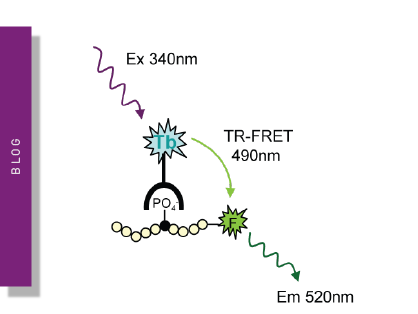
LanthaScreen is a TR-FRET technology which can be used to measure kinase activity, compound binding, and post-translation modification events. Read more about this type of assay here.