Microplate reader company
Facebook twitter Linked InBlogger You Tube Print-Version Email
line

Filter Order

Filters

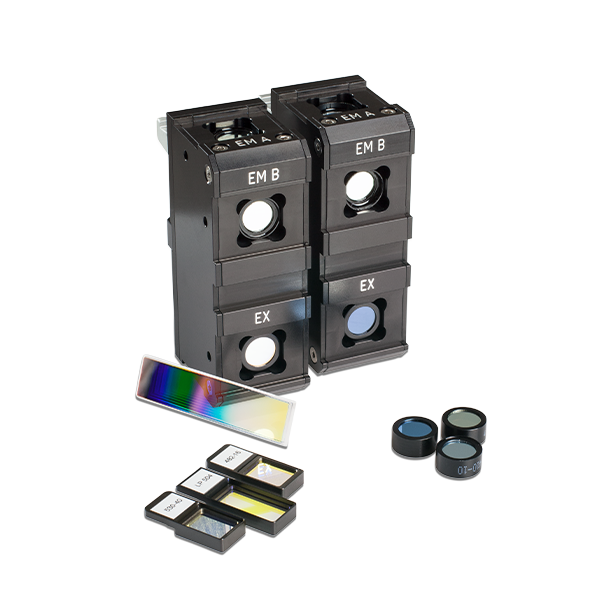
FitlersBMG LABTECH uses high quality optical filters to achieve the best fluorescence sensitivity on our microplate readers.

Many methods of wavelength selection are used in research applications. For microplate readers, the two most popular methods are filters and monochromators. A monochromator consists of a series of mirrors, lenses, and gratings that separate light into a spectrum and then directs the selected wavelengths toward the sample. Alternatively, filters use light-interference principles that permit only the appropriate wavelengths to pass.

Monochromators are most appropriate when novel compounds are being characterized or if a full spectrum scan is required. Monochromators are not ideal if sensitivity or accuracy is important.

Broad Filter

Through many years of experience and research, BMG LABTECH has chosen to use optical filters on its microplate readers for the following reasons:

red dot Filters are necessary if sensitivity is related to assay performance or if, as in FRET, the assay benefits from precise control of the wavelengths being used.

red dot Light transmission rate for filters is commonly between 90-97%. Monochromators have a narrow aperture that lets less light reach the sample. This provides less than 50% of the brightness as filters for some fluorochromes.

red dot Filters are unaffected by wavelength tailing, a phenomenon in monochromators where light bleeds through the ends of the spectrum, thereby increasing the background fluorescence.

narrow filter

red dot Filters also allow for more flexibility in assay design. Filters can be made to precise specifications, putting more light where it is useful and less where it is not wanted.

red dot Filters also permit fast switching between wavelengths, which usually takes less than a second and requires no calibration. The direct result in ratiometric assays is less noise and the ability to accurately discriminate between small changes in fluorescence values.

BMG LABTECH offers a wide range of filters from UV to NIR with varying band lengths. BMG LABTECH has also designed and optimized specific filters for specific assays, e.g. LanthaScreenTM and HTRF®. Furthermore, BMG LABTECH will work with the user to find the optimal filters for their assay.

Changing Filters Video This video demonstrates how to change and add excitation and emission filters within the software for a BMG LABTECH microplate reader.