


A microplate that Looks out of a microplate Reader A microplate that Looks out of a microplate Reader

Luciferase plate reader

Explore BMG LABTECH's luciferase plate readers, designed for sensitive and reliable luminescence measurements. Ideal for drug discovery and research applications.

Trusted and loved by:customer-logos


Luciferase plate reader: reliable, fast and sensitive

Readers for all needs from basic research to drug discovery

  • High-end plate microplate readers for sensitive, fast and reliable luminescence measurements
  • Available as single mode or multi-mode instruments (incl. fluorescence and absorbance)
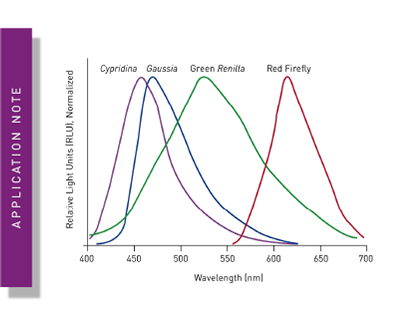
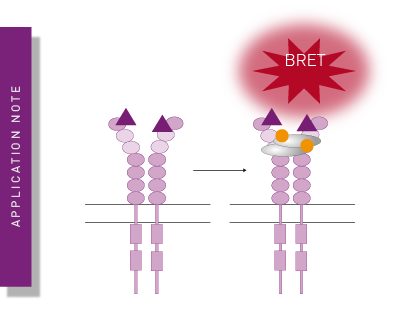
  • Detect all luciferase signals from reporter (e.g.: renilla, gaussia) to BRET
  • Detection in end-point and kinetic assays
  • LVF Monochromator-based plate readers for wavelength scanning and assay development
  • Simultaneous Dual Emission detects two wavelengths such as for dual glow or BRET simultaneously
  • The cross-talk reduction package improves data quality and reduces false positives
  • Compatible with plate formats up to 3456 wells for assay miniaturization
  • DLReady certified
  • BMG LABTECH is the only made in Germany plate reader manufacturer with more than 30 years of experience
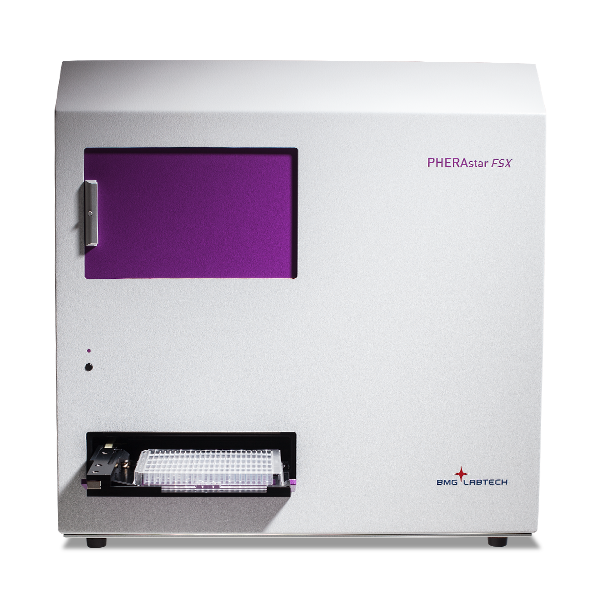
Microplate reader PHERAstar FSX

Application Notes

See how scientists and researchers are using BMG Labtech’s instruments for the luciferase-based experiments:

Frequently asked questions

  • What is a luciferase plate reader?

    A luciferase plate reader is a microplate reader optimised for luminescence detection of luciferase enzyme reactions. It measures the light emitted when luciferase enzymes oxidise their substrates, enabling quantitative readouts of reporter gene expression, promoter activity and signalling pathway modulation.
  • How does a luciferase assay work?

    In a luciferase assay, cells are engineered to express a luciferase reporter gene under the control of a promoter or regulatory element of interest. When the appropriate substrate is added, the enzyme catalyses a bioluminescent reaction that produces light proportional to reporter expression. A luciferase assay plate reader detects this light as relative light units (RLU), providing a sensitive, quantitative measure of transcriptional or post‑transcriptional regulation.
  • What is the dual luciferase assay principle?

    The dual luciferase assay principle uses two different luciferase enzymes in the same sample: one as the experimental reporter and one as an internal control. After measuring the first luciferase signal, a second reagent quenches the first reaction and simultaneously initiates the second, allowing sequential detection of both activities from the same well. The ratio of reporter to control signal normalises for variations in cell number, transfection efficiency and lysis, improving accuracy and reproducibility.
  • What type of microplate is best for luciferase assays?

    White, solid‑bottom microplates are generally recommended for luciferase assays because they reflect emitted photons towards the detector, maximising signal intensity and sensitivity. Plates should be compatible with the reader’s format and, for high‑throughput screening, have low well‑to‑well variation to support robust Z′ values.
Newsletter Sign-up